
Best Place to Put a Jade Plant: The Expert Guide to Light, Direction & Feng Shui Placement
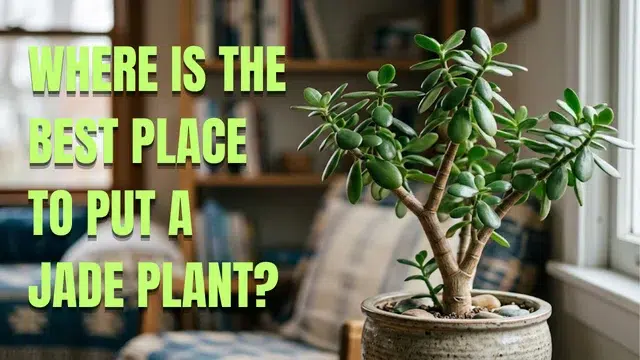
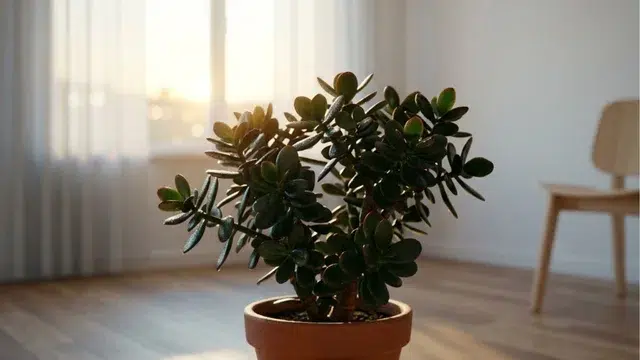
The best place to put a jade plant (Crassula ovata) is near a south- or east-facing window that delivers 4–6 hours of bright, indirect sunlight daily, away from cold drafts and heat vents.
For maximum Feng Shui and Vastu benefit, place it in the southeast corner of your living room or foyer — a position that satisfies both the plant’s horticultural needs and the energy-alignment principles of wealth and prosperity.
Why Most Jade Plant Placement Advice Fails (And What Experts Do Instead)
Most homeowners put their jade plant wherever it looks decorative — on a dark bookshelf, a dim bathroom counter, or a bedroom nightstand. The result is inevitable: leggy, pale stems stretching toward any available light, leaf drop, and a plant that slowly declines rather than thrives.
The error is treating jade plant placement as an interior décor decision rather than an environmental one. Crassula ovata is a succulent native to the dry hillsides of South Africa and Mozambique.
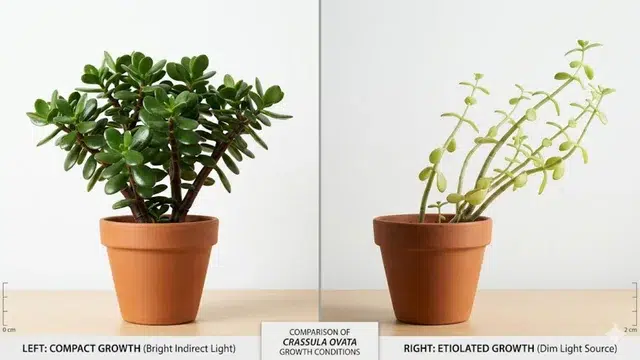
Its entire physiology is tuned for bright light and low humidity. When positioned in poor light or high-humidity zones, growth slows and stems begin to stretch toward available light — a process called etiolation — producing weak, unstable plants.
The expert approach aligns three factors simultaneously: light exposure, stable temperature, and intentional directional placement according to Feng Shui or Vastu Shastra. When these three align, the jade plant rewards you with compact growth, glossy coin-shaped leaves, and decades of vitality.
The Best Places to Put a Jade Plant (Ranked by Combined Horticultural + Feng Shui Score)
1. The Living Room — Southeast Corner Near a Window
The living room earns the top spot because it typically offers the most consistent natural light, stable temperatures, and good airflow. Position the jade plant in the southeast corner, which in Feng Shui represents the Wealth and Prosperity Gua. Feng Shui educator Anjie Cho explains that many people place a jade plant in this area to cultivate and enhance the growth of financial income.
From a purely horticultural standpoint, the southeast receives morning and midday light — ideal for a succulent that needs brightness without the scorching intensity of full afternoon western sun.
Pro tip: If the plant sits where it can catch its reflection in a nearby mirror, traditional Feng Shui holds that this doubles the abundance effect symbolically.
2. The Entryway or Foyer — Just Inside or Flanking the Front Door
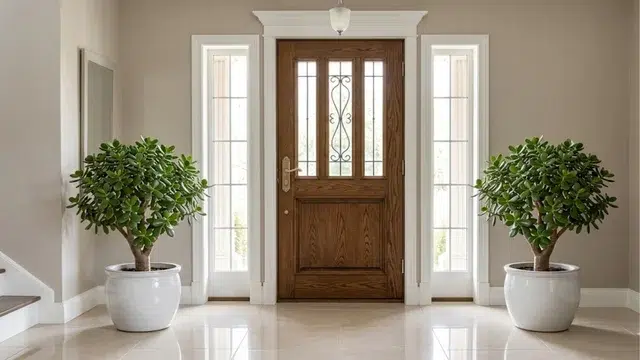
The entrance of a home is where energy (qi) enters, and jade plant placement here is one of the most universally recommended positions across both Feng Shui and Vastu Shastra. Feng Shui expert Anjie Cho notes that a jade plant near the entry can be placed with the intention to invite wealth and prosperity, creating an inviting space filled with potential.
Vastu Shastra aligns with this — positioning the plant near the north entrance is considered highly auspicious for career success and incoming opportunities.
Horticulturally, many foyers have sidelights or transom windows near the front door that provide exactly the bright, indirect light jade plants need. Avoid placing the plant directly behind a solid door where it will be in permanent shadow.
3. The Home Office — Southeast Corner of Your Desk or Room
A jade plant in the home office is considered auspicious for business luck in Feng Shui when placed in the southeast corner of the office or the southeast corner of the desk itself. Many entrepreneurs and professionals keep it here specifically to support productivity and financial growth.
The practical benefit: a well-lit home office is already optimized for human work performance — the same bright, stable conditions that help you concentrate are exactly what a jade plant needs to maintain compact, healthy growth.
Avoid: Placing the plant directly under an air conditioning vent or heating unit. The hot, dry air from heat vents or cold drafts from air conditioning will desiccate or shock the succulent.
Read also: How to propagate a jade plant (stem cuttings, leaf propagation)
4. The Dining Room — On or Near the Table
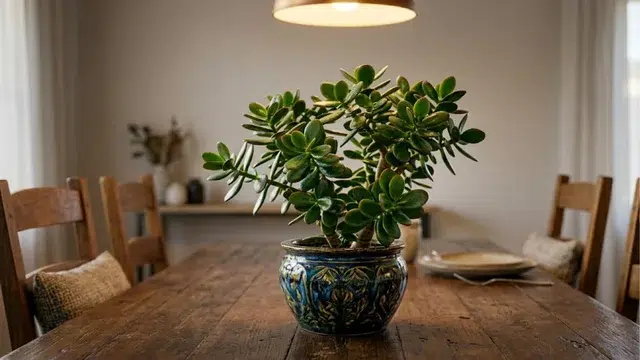
A jade plant on the dining table or a sideboard nearby symbolizes nourishment, abundance, and steady growth — themes that resonate with the act of sharing meals. When positioned where it can catch its reflection in a dining room mirror, the abundance symbolism is traditionally amplified.
Horticulturally, dining rooms near exterior walls with large windows are excellent spots, provided the plant isn’t in a cold draft from an exterior door.
The Best Direction to Face a Jade Plant
Both Feng Shui and Vastu Shastra converge on a consistent directional answer: east and southeast are the premier directions, with north also favored by Vastu for career and opportunity energy.
| Direction | Feng Shui Significance | Vastu Significance | Light Quality |
|---|---|---|---|
| Southeast | Wealth & Prosperity Gua | Venus-ruled, wealth luck | Morning + midday light ✅ |
| East | Family & Growth | Auspicious for families | Gentle morning light ✅ |
| North | Career & Life Path | Opportunities, career | Indirect, consistent ✅ |
| South | Fame & Recognition | Less recommended | Harsh afternoon light ⚠️ |
| West | Creativity | Not traditional for jade | Strong afternoon light ⚠️ |
Where NOT to Put a Jade Plant
Bedrooms
Vastu Shastra does not recommend jade plants in bedrooms. Feng Shui practitioners are divided — some believe growing plant energy can disrupt rest. Horticulturally, bedrooms are often darker and cooler, which slows growth and risks etiolation. If you love the idea of a jade plant in your bedroom, place it in the wealth area of that specific room using the bagua map overlay.
Windowless Bathrooms and Laundry Rooms
Both Feng Shui and Vastu universally advise against placing wealth symbols in bathrooms, as the constant draining of water is considered symbolically unfavorable for prosperity. There is an exception: a bathroom with a window can actually work.
Feng Shui expert Anjie Cho notes that a jade plant by a bathroom window can help remedy excess water-element drainage and elevate qi. Without a window, skip it entirely — the plant will decline quickly in low light and high humidity.
Near Heat Vents or Cold Drafts
A jade plant placed near an HVAC vent — hot or cold — will suffer. Hot, dry forced air desiccates the succulent leaves; cold drafts cause leaf drop and can permanently damage the plant.
Dark Corners
Any dim, windowless nook will cause etiolation. The stems will stretch visibly toward light, become weak, and the plant’s natural compact tree-like shape will be lost permanently.
Read also: How to Prune a Jade Plant Correctly
The Hidden Role of Light Intensity in Jade Plant Placement
Light is the single most important placement variable, ahead of direction, room, or symbolism. A jade plant needs 4–6 hours of bright light daily at minimum. Here is what this means practically:
Young jade plants (under 2–3 years old, or recently propagated from a stem cutting or single leaf) should receive bright, indirect sunlight only. Direct sun can scorch their less-developed leaves.
Mature, established jade plants can tolerate and actually benefit from some morning direct sunlight through a south- or east-facing window. This direct light encourages the characteristic reddish leaf-tip blush that indicates a thriving specimen.
Signs your placement is wrong:
- Drooping leaves → underwatering, overwatering, or too much sun
- Yellowing leaves → overwatering, nutrient deficiency, or excessive sun
- Brown leaf tips → underwatering, sunburn, or pest pressure (check for mealybugs and scale)
- Leggy, elongated stems → insufficient light — the definitive signal to move the plant immediately
Read also: Jade plant care guide (watering, soil, fertilizing)
Jade Plant Placement FAQs
Mature, well-established jade plants can handle several hours of direct morning sunlight through a south- or east-facing window. However, direct intense afternoon sun — particularly through a west-facing window in summer — can scorch the leaves. Young plants should always be kept in bright, indirect light until they are well-rooted and established.
It is generally not recommended by either Feng Shui or Vastu Shastra. Practically, bedrooms tend to be darker than living spaces, increasing the risk of etiolation. If you want one in your bedroom, place it directly on the windowsill where light is strongest, and ensure the room doesn’t drop below 55°F (13°C) at night.
A south-facing window is excellent for jade plants — it delivers the longest and most consistent daily light. For young or recently propagated plants, filter the light with a sheer curtain to prevent leaf scorch. Established plants will thrive without the curtain and may develop attractive reddish leaf tips from the light intensity.