
Best Place to Put a Jade Plant: Light, Direction & Feng Shui — The Complete Expert Guide

The best place to put a jade plant indoors is a south- or east-facing window where it receives 4–6 hours of bright light daily. In Feng Shui, that translates to the southeast corner of your home — the wealth and abundance sector — because jade’s round, coin-shaped leaves symbolize prosperity.
But here’s the thing most articles won’t tell you: light comes before everything else. I’ve grown jade plants for over 10 years, and the single most common mistake I see is placing a jade plant somewhere beautiful — on a coffee table, in a dim hallway, in a windowless bathroom — because it looks right, not because the plant will thrive there.
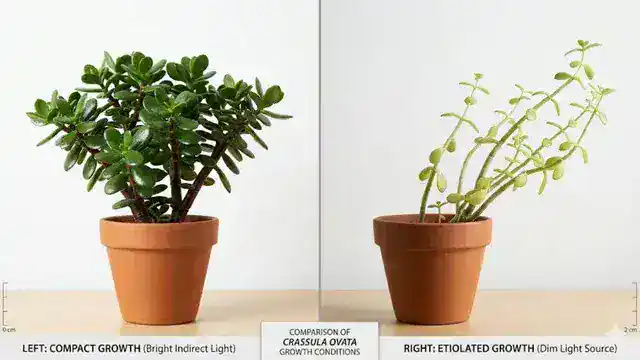
Within weeks, those plants start stretching toward the nearest light source, growing long and leggy in a process called etiolation, and no amount of Feng Shui intention will reverse that.
In this guide, I’ll walk you through exactly how I choose placement for my own jade plants in different rooms, what happens when they get the wrong window direction, and how to balance both light science and Feng Shui so your plant is both healthy and intentional.
The #1 Rule Before Anything Else: Light Always Wins
Jade plants (Crassula ovata) are native to the arid scrublands of South Africa, where they evolved under bright, dry conditions with intense light exposure. They are not low-light plants. They are not the same as pothos or snake plants that quietly adapt to a dim corner.
When a jade plant doesn’t get enough light, it responds immediately. The stems begin elongating — sometimes visibly within a few weeks — reaching toward the nearest light source.
This is etiolation: a hormonal response where phytohormones cause the stems to stretch in a survival attempt to find light. The leaves spread apart, the stems thin, and the beautiful compact tree-like structure you bought starts looking sparse and unstable.
Signs your jade plant is in the wrong spot:
- Stems growing long and thin between leaves (internodes stretching)
- Leaves becoming smaller and more widely spaced
- Overall color lightening from rich dark green to pale green or yellow-green
- The plant leaning heavily toward the window
Once etiolation begins, you can’t reverse the stretched stems — only prune them back and correct the placement going forward. This is why getting placement right from the start matters so much.
Window Direction: Which Is Best for Your Jade Plant?
Not all windows deliver the same light. Here’s what I’ve experienced with each direction, and what you can realistically expect:
South-Facing Window — The Gold Standard
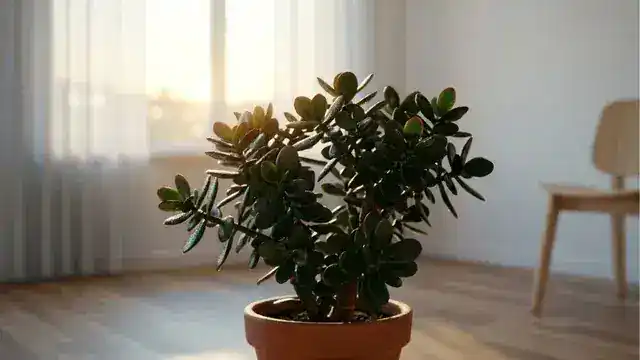
A south-facing window (in the Northern Hemisphere) gets the longest and most consistent light exposure throughout the day. For jade plants, this is ideal.
My largest, most compact jade plant has lived 3 feet from a south-facing window for seven years. It has never gone leggy. New growth is tight, the trunk is thick, and it has even flowered twice in late winter.
One caveat: in peak summer, direct afternoon sun through south-facing glass can be intense. If you notice the leaf edges developing a reddish or purplish tinge — that’s actually a normal stress response to strong light and is generally harmless. But brown, crispy patches mean the intensity is too high. A sheer curtain in July solves this immediately.
East-Facing Window — My Personal Favorite for Most Rooms
East windows deliver gentle morning sun and bright indirect light for the rest of the day. This is the most forgiving placement for jade plants — strong enough to prevent etiolation, but without the intensity of midday sun. I keep two jade plants on my east-facing kitchen windowsill year-round with zero issues.
East-facing windows also happen to align perfectly with Feng Shui principles around health and family energy, making them a natural choice for living rooms and kitchen spaces.
West-Facing Window — Works, With a Caveat
West windows deliver strong afternoon sun, which jade plants can handle. However, afternoon sun in summer can be harsher than morning sun, so if your west window gets direct, intense light in July and August, either use a sheer curtain or move the plant back slightly. In autumn and winter, west-facing windows are actually excellent as the angle softens.
North-Facing Window — Avoid If Possible
This is where jade plants struggle. North windows rarely get direct sun in the Northern Hemisphere, and the ambient indirect light is usually below the threshold jade plants need to stay compact.
Plants in north-facing windows typically begin showing etiolation within 4–6 weeks. If a north window is your only option, a full-spectrum LED grow light placed 10–14 inches above the plant and running 12–14 hours daily will compensate effectively.
Jade Plant Feng Shui Placement: The Wealth Corner Explained
Now that we’ve covered light science, let’s talk intention. Feng Shui placement for jade plants has real logic behind it — and it often overlaps with the plant’s physical needs.
In Feng Shui’s Bagua map, the southeast sector of any space represents the Wealth and Prosperity Gua. Jade plants are considered one of the most auspicious plants for this area because:
- Their round, coin-shaped leaves symbolize abundance and financial growth
- They carry both wood energy (growth, vitality, expansion) and earth energy (stability and nurturing)
- A healthy, thriving plant — not a struggling one — is what channels positive chi
The key phrase here is healthy and thriving. A leggy, pale jade plant in the southeast corner of your living room is not bringing in prosperity energy — it’s signaling neglect. This is why placing it in good light isn’t just about horticulture; it’s actually aligned with Feng Shui philosophy too.
Best Feng Shui placements for jade plants, room by room:
Living Room — Southeast Corner Near a Window
This is the classic placement and for good reason. The living room is where energy gathers and where guests experience your home’s atmosphere first.
A healthy jade plant in the southeast corner of a well-lit living room covers all bases: good light, correct Feng Shui direction, and a visible anchor for abundance intention.
Practical tip: if your southeast corner doesn’t have natural light, choose a different corner that does, or supplement with a grow light. An unhealthy jade plant in the “right” corner is worse than a thriving one slightly off the compass direction.
Entrance and Foyer — Near the Front Door
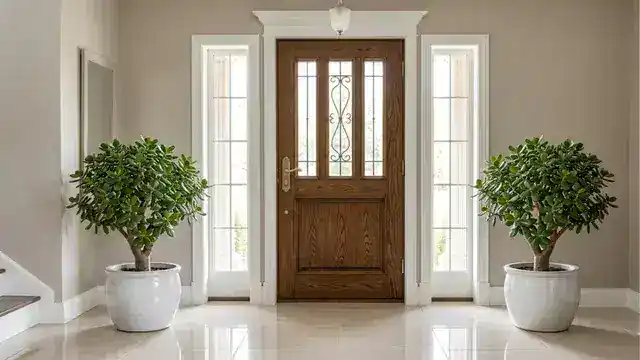
Placing a jade plant just inside or beside the front entrance is believed to welcome positive qi and prosperity into the home.
From a practical standpoint, foyers often have windows near the door or receive good ambient light — so this works well for jade plants in many homes. A pair of jade plants flanking the entrance is a powerful visual statement.
One thing to watch: foyers with no natural light should use this placement only with grow light supplementation.
Home Office or Desk — Southeast Corner
For those working from home, a jade plant in the southeast corner of your desk symbolizes career growth and financial stability in Feng Shui.
Practically, placing it near your office window ensures it gets enough light to stay compact and healthy — and research suggests that having living plants in a work space genuinely reduces stress and supports focus.
I keep a small jade bonsai on my writing desk near the east window. It’s been there for four years, and it’s one of the most reliable, no-fuss plants I own.
Dining Room — East or Southeast Corner
The dining room represents nourishment and family abundance. A jade plant in the east or southeast corner of this room is traditionally believed to support harmony and steady growth.
Practically, dining rooms often have good window access, making this a workable placement if natural light is available.

Bedroom — With Caution
Jade plants can be kept in bedrooms, but with caveats. They do well with bright, indirect light — which bedrooms often have if there’s a south or east window.
From a Feng Shui perspective, the energy in bedrooms should be calm and restoring, so one small jade plant in a bright window spot is fine.
What to avoid: don’t place a jade plant on a nightstand or in a corner with no light — it will deteriorate quickly, which is the opposite of calming.
Bathroom — Generally Avoid
This is where Feng Shui and horticulture fully agree: bathrooms are typically too humid, too dark, and too poorly ventilated for jade plants. The high moisture environment promotes root rot (jade roots need to dry out fully between waterings), and most bathrooms don’t have enough light.
Some Feng Shui practitioners also note that the constant draining of water in a bathroom symbolically “drains” the wealth energy the jade plant is meant to attract.
The exception: a bathroom with a large, sun-facing window and good ventilation can work. But most can’t meet that bar.
Seasonal Adjustments: Moving Your Jade Plant Throughout the Year
One thing almost no article mentions — and something I’ve learned through years of trial — is that the same window performs very differently in summer versus winter.
- Summer (June–August): South-facing windows get intense, direct afternoon sun. If your jade plant is sitting right up against south-facing glass in July, watch for leaf scorching. Either use a sheer curtain or pull the plant back 2–3 feet. East windows are excellent in summer — they get only morning sun and avoid harsh afternoon heat.
- Autumn (September–November): Shorter days mean less light overall. This is the time to start moving jade plants closer to their window. A plant that was 3 feet back in July should move to 1–2 feet from the glass by October.
- Winter (December–February): The lowest light period of the year. Jade plants naturally slow down, and this is fine — but they still need their best available light. Move them to the sunniest window you have. South windows, which were too intense in summer, are now perfect. If your home gets very short days (less than 10 hours of daylight), supplement with a grow light for 12 hours.
- Spring (March–May): As light returns, jade plants wake up and start pushing new growth. If you’ve had them on a grow light all winter, start transitioning them back to natural light gradually to avoid shock.
Signs Your Jade Plant Is in the Wrong Spot
I’ve rescued more than a few jade plants from bad placements. Here’s what to look for:
| Sign | What It Means | Fix |
|---|---|---|
| Long, spindly stems with widely-spaced leaves | Etiolation — insufficient light | Move to brighter window immediately |
| Pale, yellowish-green leaves | Not enough light for pigment production | Brighter placement + rotate every 2 weeks |
| Soft, mushy leaves | Overwatering, often worsened by low-light/high-humidity placement | Move to drier, brighter spot; reduce watering |
| Crispy brown patches on leaves | Sunburn from too much direct, unfiltered sun | Sheer curtain or move back from glass |
| Plant leaning heavily to one side | Reaching for light from one direction | Rotate 180° and move closer to window |
| Reddish or purplish leaf edges | Mild light stress — generally harmless and sometimes desirable | Monitor; no action needed unless scorching |
How to Rotate and Maintain Even Growth
One small habit that makes a significant difference: rotate your jade plant a quarter turn every 2 weeks. Because jade grows toward light, plants that sit in one position for months develop uneven, lopsided canopies. Regular rotation keeps growth balanced and the plant looking like the compact, symmetrical tree it’s meant to be.
I do mine every time I water — which for jade plants in winter is roughly every 3–4 weeks, so it becomes a built-in reminder.
FAQ — People Also Ask
South or east-facing windows provide the best conditions in the Northern Hemisphere. South windows give maximum light year-round; east windows deliver gentler morning sun that prevents scorching while keeping the plant compact and healthy. Avoid north-facing windows unless you supplement with a grow light.
Place your jade plant in the southeast corner of your home or office — the Wealth and Prosperity Gua in Feng Shui. Ideally, this placement should also have good natural light. A thriving, compact jade plant channels far more positive energy than a struggling one placed in a “correct” but dark corner.
Yes, but only if the bedroom has a bright, south or east-facing window. Jade plants need 4–6 hours of good light daily to stay healthy. A bedroom without adequate natural light will cause the jade plant to decline quickly, which won’t bring the calm, positive energy you’re hoping for.
Jade plants can do very well outdoors in summer if temperatures stay above 50°F (10°C) and you acclimate them gradually — move them to a shaded outdoor spot first for 1–2 weeks before exposing them to full outdoor sun. Sudden exposure to intense outdoor light after indoor conditions causes sunburn. Bring them back inside before autumn temperatures drop below 50°F.
For south-facing windows: 1–3 feet is ideal, with a sheer curtain in peak summer. For east-facing windows: place within 1–2 feet year-round. The further from the glass, the less light reaches the plant — even 3–4 feet makes a significant difference in light intensity.
The Simple Rule I Follow
After 10 years of growing jade plants in different rooms, different apartments, and different climates, this is the principle I come back to every time:
Find the brightest, most stable spot in your home first. Then see if it aligns with Feng Shui. In most homes, the brightest spots — south or east windows in living rooms, offices, and kitchens — naturally align with the active, prosperity-oriented areas of the Bagua. That’s not a coincidence; it reflects the idea that light, energy, and vitality tend to flow in the same direction.
When both science and intention agree on a placement, that’s the right spot for your jade plant.
If your jade plant is already showing signs of leggy growth from a poor placement, check out my guide on Why Is My Jade Plant Dropping Leaves? 6 Common Causes and Easy Fixes — it covers the recovery steps in detail. And if you’re thinking about repotting as part of the relocation, How to Propagate Jade Plants walks you through the process step by step.