
How to Fix Leggy Succulents: A Step-by-Step Recovery Guide

How to Fix Leggy Succulents Fast
Yes, a leggy succulent can often be saved, but the stretched growth itself will not become compact again. You have two options: improve the light and keep the plant as it is, or cut back the healthy top growth and root it.
If the stretching is mild, better light may be all your succulent needs. If the stem has become long and bare or the rosette is leaning heavily, cutting and propagating the healthy top is usually the best way to restore a compact shape.
This guide explains how to identify leggy growth, when you should cut, how to root the cutting, how to repot a leggy succulent when necessary, and how to prevent the problem from happening again.
What Does a Leggy Succulent Look Like?
A leggy or etiolated succulent shows clear signs that it has been stretching toward a light source:
- Tall, thin, or elongated stems with wider spaces between leaves
- Pale or less intense new growth, especially when the plant is receiving very little light
- Leaning toward a window or another light source
- Leaves spreading or pointing upward instead of forming a compact rosette
- Top-heavy growth that begins to flop or becomes difficult to support
Low light is a common cause of lanky, pale succulent growth. Rosette-forming succulents may also open up and flatten their leaves as they try to capture more light.
If your plant shows only mild stretching, increasing light may be enough to produce healthier, more compact growth.
If the stem is bare for several inches and the plant has become unstable, cutting and propagating the healthy top is usually the more practical solution.
Is Your Succulent Leggy or Naturally Tall?
Not every tall succulent is suffering from etiolation.
Some succulents naturally grow upright, develop longer stems with age, or form trailing growth. The key is to look for a change in the plant’s normal growth pattern.
A succulent can have a long stem without being leggy. Legginess is more likely when the growth is unusually elongated, weak, widely spaced, or pale compared with the plant’s normal growth.
| Sign | Likely Leggy Growth | Natural Growth |
|---|---|---|
| Large gaps suddenly appear between leaves | Yes | Usually no |
| Plant leans strongly toward a window | Common | Not necessarily |
| New growth becomes pale or weak | Common | Not typical |
| Rosette opens noticeably | Common | Depends on species |
| Growth pattern has always been elongated | Less likely | More likely |
| New growth remains compact in good light | No | Possible |
For example, a succulent that naturally produces a stem is not necessarily “leggy.” Etiolation is more likely when the plant has suddenly started producing unusually elongated, weak, or pale growth.
Why Is My Succulent Getting Leggy?
The primary cause is insufficient light. Succulents grown indoors often receive considerably less light than they would in their natural environments. When light levels are too low, new growth can become tall, thin, pale, and widely spaced.
Other factors can contribute to the problem:
- Seasonal light changes: Shorter days and weaker indoor light during fall and winter can trigger stretching.
- Poor placement: A plant several feet away from a bright window may receive much less usable light than one positioned closer to it.
- Overcrowding: Plants growing tightly together can shade one another.
- Species differences: Some succulents naturally tolerate lower light better than others.
- Sudden changes in light: Moving a plant directly from low light into intense sunlight can cause sun damage, so increases in light should be gradual.
When Do Succulents Usually Get Leggy?
Succulents usually become leggy when they continue producing new growth while the available light is not strong enough to support their normal compact form.
You may notice legginess after:
- Moving a succulent to a darker room or farther from a window
- Fall or winter arrives and indoor light levels drop
- A plant grows larger and begins receiving less light across its canopy
- A succulent is near a window but the actual light reaching it is still insufficient
- Warm growing conditions continue while available light remains low
The important point is that legginess is caused by the growing conditions rather than by a particular season alone. A succulent can become leggy at any time of year if its light is inadequate.
Watch the newest growth. If new leaves continue appearing farther apart or the plant keeps leaning toward the brightest nearby light source, the current location may not be providing enough light.
Why Does Low Light Make Succulents Stretch?
When light is insufficient, succulents may produce elongated growth as they try to reach a brighter source.
The result is the familiar leggy appearance: longer stems, larger gaps between leaves, and growth that may lean toward a window.
Once that elongated growth has formed, simply increasing the light will not make the existing stem shrink back into its original compact shape. New growth, however, can become more compact under better conditions.
Can You Fix a Leggy Succulent Without Cutting It?
Partially. If you increase the available light, future growth can become shorter and more compact. But the portion of the stem that has already stretched will not return to its previous shape.
For Mild Stretching
Try:
- Moving the plant to a brighter location gradually
- Adding a suitable grow light if natural light is inadequate
- Rotating the pot regularly
- Monitoring new growth rather than trying to reverse the existing stem
For Severe Stretching
If the succulent has a long bare stem, a weak or falling-over rosette, or a large amount of stretched growth, beheading and rooting the healthy top is usually the most effective way to restore its appearance.
This technique is commonly used with rosette-forming succulents such as Echeveria and Aeonium. Iowa State University Extension specifically describes beheading as a form of stem-cutting propagation for rosette-forming succulents.
How to Fix a Stretched Succulent
A stretched succulent is usually fixed by improving its light and deciding what to do with the growth that has already elongated.
If the stretching is mild, move the plant gradually toward a brighter location or provide supplemental light. The new growth can become more compact, but the existing stretched stem will remain elongated.
If the succulent has developed a long bare stem or an unstable rosette, you can remove the healthy top and root it as a cutting. This gives you a way to keep the compact portion of the plant rather than waiting for an already stretched stem to change shape.
In other words, better light fixes the cause, while cutting can fix the appearance of severe existing legginess.
Before You Cut: Make Sure the Plant Is Healthy
Do not automatically behead a succulent simply because it looks unattractive.
First inspect the plant for:
- Soft or mushy stems
- Black or brown rotting tissue
- Severe pest damage
- Completely dried-out tissue
- Healthy leaves and stems near the top
You want to propagate healthy tissue, not a section that is already damaged.
If the plant also has signs of root rot, deal with the damaged roots and affected tissue first. Our guide to how to treat root rot in houseplants can help you distinguish rot from normal succulent stress.
How to Fix a Severely Leggy Succulent
The following method, often called beheading, works particularly well for many rosette-forming succulents.
Iowa State University Extension recommends removing the rosette with a short section of stem attached, allowing the cut end to callus, and then rooting it like a normal stem cutting.
Step 1: Choose Healthy Growth
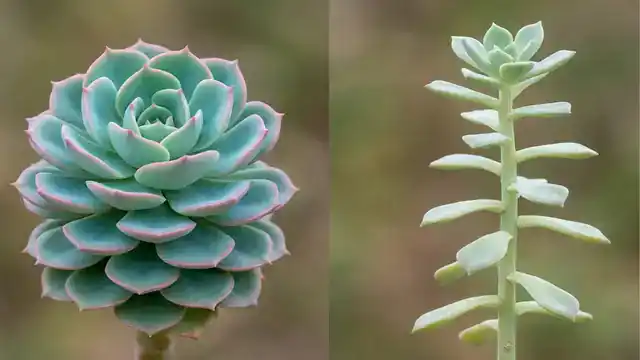
Look at the top of the plant and identify the healthiest, most compact growth.
Choose a section with:
- Firm leaves
- Good color
- No signs of rot
- A healthy growing point
- Enough stem below the rosette to plant securely
Avoid cutting through damaged, yellowing, or mushy tissue.
Step 2: Sterilize Your Cutting Tool
Use a clean, sharp pair of pruning shears or a sharp knife.
Wipe the blade with rubbing alcohol before making the cut and clean it again afterward. A sharp tool creates a cleaner wound than a dull tool that crushes the stem.
Step 3: Make the Cut

For many rosette-forming succulents, leave about 1–2 inches of healthy stem below the lowest leaves.
The exact amount depends on the species and the shape of the cutting. The goal is to leave enough bare stem to anchor the cutting without burying the leaves.
Make one clean cut rather than repeatedly sawing through the stem.
Step 4: Let the Cutting Callus

Place the cutting somewhere dry, clean, and protected from harsh direct sunlight.
Allow the cut end to dry and form a firm callus before planting.
The exact time varies with the species, thickness of the stem, temperature, and humidity. Do not rely on a fixed number of days alone. The important sign is that the cut surface has dried rather than remaining fresh and wet.
Iowa State University Extension recommends allowing succulent stem cuttings to dry and callus for several days before planting because callusing reduces the risk of rot before roots develop.
Step 5: Plant the Cutting

Use a small container with a drainage hole and a well-draining succulent or cactus growing medium.
Insert only the bare portion of the stem into the mix. Keep the leaves above the soil.
Do not keep the newly planted cutting in constantly wet soil. Succulent cuttings are particularly vulnerable to rot while they are still developing roots.
Once the cutting begins rooting, it can gradually be treated as a normal succulent.
Most succulent stem cuttings do not require rooting hormone to root successfully.
Step 6: Care for the Original Stem

Do not throw away the remaining stem immediately.
Leave the healthy base in its container and provide suitable light. Depending on the species and whether viable growing points remain, the old stem may produce new offsets or side rosettes.
Be patient. New growth may take time to appear.
Iowa State University Extension notes that beheaded rosette-forming succulents can produce multiple side rosettes from the remaining stalk, although the response depends on the plant.
If the remaining stem eventually shows no viable growth and begins to deteriorate, remove it.
How to Repot a Leggy Succulent
Repotting can help when a leggy succulent has become unstable, has outgrown its container, or needs fresh, well-draining growing medium, but repotting alone will not reverse etiolation.
If the plant is simply stretched but otherwise healthy, fix the light problem first rather than repotting solely because it is leggy.
If the succulent is top-heavy or you are combining repotting with beheading, choose a relatively small pot with a drainage hole. A container that is much larger than the root system can hold excess moisture for too long.
When repotting:
- Remove the plant carefully and inspect the roots for soft, dark, or rotting tissue.
- Remove damaged roots with a clean tool if necessary.
- Use a well-draining succulent or cactus growing medium.
- Position the plant so the leaves remain above the soil.
- If you are rooting a beheaded top, bury only the bare stem rather than the leaves.
- Avoid keeping the newly planted cutting or damaged roots constantly wet.
If root rot is present, address the rot before treating the legginess. Improving the light is still important, but a plant with damaged roots needs its root problem dealt with separately.
Liana’s Experience With a Leggy Echeveria
An Echeveria on my east-facing windowsill started stretching toward the morning sun until the stem was bare and the rosette nearly toppled over.
I beheaded it in late spring, allowed the cutting to callus for several days, and then planted it in dry succulent soil.
The old stem eventually produced two small offsets from its remaining nodes, while the top cutting rooted and developed into a compact plant again.
The biggest lesson for me was not to rush the process. My first attempt failed because I planted the cutting before the wound had properly dried.
How to Fix Legginess Without Beheading

If you prefer not to cut your succulent, you can still improve its future growth and overall appearance.
Increase Light Gradually
Move the plant toward a brighter location over several days rather than placing a low-light-adapted plant immediately into intense direct sunlight.
A sudden increase in intense light can cause sunburn or sunscald. Succulents that have been growing in low light need time to adapt.
Add a Grow Light
If your home does not provide enough natural light, supplemental lighting can help.
Full-spectrum LED grow lights are one option for indoor succulents. The ideal distance and duration depend on the light’s output and the plant, so follow the manufacturer’s recommendations rather than relying on distance alone.
Iowa State University Extension recommends supplemental high-output, full-spectrum lighting when a sufficiently bright indoor location is unavailable.
Rotate the Pot
Rotate the container regularly so one side of the plant does not constantly face the strongest light source.
This can help produce more balanced growth, although rotation cannot reverse a stem that has already stretched.
Provide Support
A small stake can temporarily support a top-heavy plant while you improve its growing conditions.
Support should be treated as a temporary solution, not a replacement for adequate light.
How to Prevent Succulents From Getting Leggy
Give Them Enough Light
Light is the most important factor in preventing etiolation.
Many indoor succulents need abundant bright light to maintain compact growth. Iowa State University Extension notes that low light can cause lanky, pale growth and recommends brighter locations or supplemental lighting when necessary.
Watch the new growth.
If new leaves continue appearing farther apart and the plant keeps leaning toward the window, the current light level may not be sufficient.
Rotate Regularly
Turn the pot periodically so the plant does not continually grow toward one direction.
This is especially useful when a succulent is growing close to a window.
Adjust for Seasonal Light Changes
Indoor light can change significantly throughout the year.
A location that works well during summer may provide much less usable light during winter. If your succulent normally stretches during the colder months, consider moving it closer to a suitable bright window or adding supplemental lighting before the problem becomes severe.
You can also see our guide to succulent summer care for seasonal growing tips.
Use a Suitable Pot and Soil
Choose a container with a drainage hole and use a growing medium that drains efficiently.
Avoid oversized pots that stay wet for too long. Succulents generally do better when excess moisture can drain away rather than remaining around their roots.
Poor drainage combined with excessive watering can increase the risk of root problems.
Common Mistakes When Fixing a Leggy Succulent
1. Expecting the Stretched Stem to Shrink
Better light can improve future growth, but it will not make an already elongated stem become compact again.
2. Cutting Through Unhealthy Tissue
Only use healthy tissue for propagation. If the stem is soft, black, or mushy, continue cutting until you reach healthy tissue.
3. Planting the Cutting Before the Cut Has Dried
A fresh wound placed directly into moist growing medium can be more vulnerable to rot.
Allow the cut end to dry and callus first.
4. Giving a Fresh Cutting Too Much Direct Sun
A freshly cut or newly rooted succulent may be more vulnerable to intense sunlight, particularly if the parent plant was previously growing in lower light.
Increase light gradually.
5. Watering Too Frequently
A cutting without an established root system does not need the same watering routine as a mature rooted plant.
Avoid keeping the growing medium constantly wet while the cutting is establishing.
6. Assuming Every Succulent Responds the Same Way
Propagation success depends on species and growth habit.
Stem cuttings work well for many succulents, while others are better propagated from leaves, offsets, or division.
For broader plant-care problems, see our guide to common houseplant mistakes to avoid.
Frequently Asked Questions
Yes, if the problem is mainly insufficient light. Improving the light can allow future growth to become more compact, but the existing stretched stem will not return to its original shape. If you want to restore a compact rosette, cutting and rooting the healthy top is usually the more practical option.
Give it more suitable light and decide whether the existing stretched growth is acceptable. For severe stretching, remove the healthy compact top, allow the cut end to callus, and root it as a stem cutting. Beheading is particularly useful for many rosette-forming succulents.
Rooting time varies by species, temperature, light, and growing conditions. Rather than repeatedly pulling on the cutting to check for roots, watch for signs that the cutting has established and resumed growth.
The best time is generally when the plant is actively growing and able to recover readily. However, indoor conditions vary, so plant growth matters more than following a rigid calendar date.
It depends on the species and whether viable growing points remain. Some rosette-forming succulents can produce new side rosettes from the remaining stem, but this is not guaranteed for every plant.
Most common indoor succulents need abundant bright light to maintain compact growth. The exact requirement varies by species. If natural light is insufficient, supplemental grow lighting can help. Iowa State University Extension recommends bright indoor light and supplemental lighting when necessary.
Sometimes. Leaf propagation works well for certain succulents, including several Echeveria, Graptopetalum, Sedum, Crassula, and Kalanchoe types, but it is not successful for every species. If you want to propagate a leggy succulent, choose the method that matches the species rather than assuming every succulent can be propagated from leaves.
Final Thoughts
Leggy growth is usually a sign that a succulent is not receiving enough light for compact growth.
If the stretching is mild, improve the light and monitor the new growth. If the plant has developed a long bare stem or a top-heavy rosette, beheading and rooting the healthy top can give you a much more compact plant.
The key is to fix the underlying problem rather than simply cutting the plant and putting it back in the same low-light location.
Give the plant better light, avoid sudden changes that can cause sun damage, use a well-draining growing medium, and give fresh cuttings time to callus and develop roots.
Have you rescued a leggy succulent? Share what worked for you in the comments.