
Snake Plant Flower: Why They Bloom & How to Encourage Flowers

If your snake plant suddenly sends up a tall stalk covered with tiny, fragrant flowers, you may wonder whether something is wrong with it.
The good news is that snake plants can flower indoors. The unusual part is how rarely it happens. As NC State Extension notes, snake plants rarely bloom when grown as houseplants, even though they naturally flower in their native environment.
A snake plant flower is usually a sign that a mature plant has reached the right combination of growing conditions and environmental cues. Mild stress may play a role, but deliberately neglecting or dehydrating the plant is not a reliable way to make it bloom.
Here is what snake plant flowers look like, why they appear, when they bloom, how to care for the plant while it is flowering, and what to do once the flowers fade.
What Does a Snake Plant Flower Look Like?
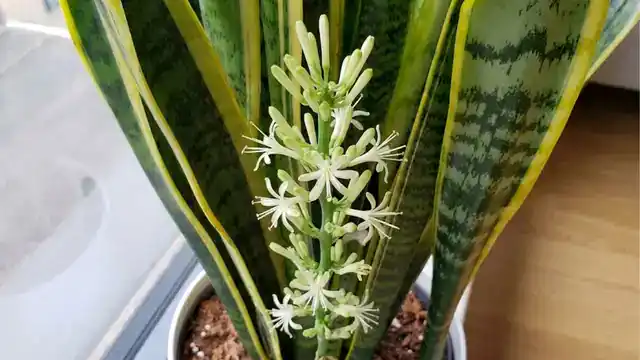
A snake plant flower develops on a tall, slender flower stalk that emerges from the plant.
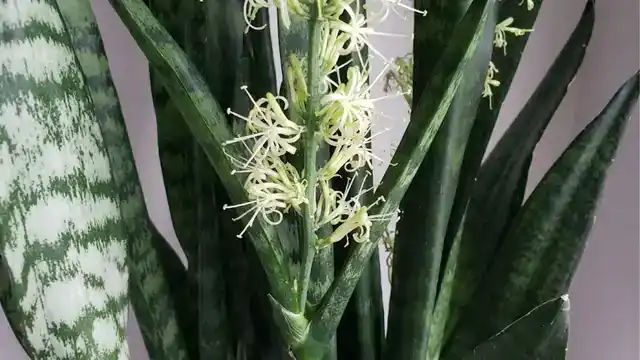
The individual flowers are small and usually greenish-white, cream-colored, or white. They grow in clusters along the stalk and have a delicate appearance that contrasts with the plant’s stiff, upright leaves.
NC State Extension describes the flowers as small, sticky, fragrant blooms arranged on a raceme. Orange berry-like fruit can develop after flowering, although fruit is rarely seen on indoor plants.
How Do Snake Plant Flowers Smell?
The fragrance varies, but snake plant flowers are generally considered fragrant. The scent may be more noticeable when several flowers are open at once.
If your plant produces sticky droplets around the flowers, don’t be alarmed. Nectar is a normal part of the flowering display.
Because the nectar can be sticky, you may want to protect nearby furniture or wipe up any residue that reaches surrounding surfaces.
Why Do Snake Plants Flower?
There is no single trigger that makes every snake plant flower.
Maturity and growing conditions both matter, and environmental stress may also be associated with flowering. A mature plant that has spent years growing in the same container may suddenly produce a flower stalk even though you were not specifically trying to encourage flowering.
This is one reason snake plant flowers can seem mysterious.
However, it is important not to interpret this as a reason to deliberately stress the plant. Severe drought, root damage, or prolonged neglect can cause problems without producing flowers.
Instead, think of flowering as a reproductive event that can occur when a mature plant encounters favorable conditions and the right environmental cues.
When Do Snake Plants Flower?
Snake plants can flower at different times depending on where and how they are grown.
NC State Extension lists spring as the flowering period for Dracaena trifasciata and notes that the species rarely flowers indoors.
In its native environment, flowering is a natural part of the plant’s life cycle. Indoors, however, stable household conditions and lower light levels can make flowering much less common.
So if your snake plant has never flowered, there is no reason to assume that it is unhealthy.
How Often Do Snake Plants Flower?
There is no reliable indoor flowering schedule.
Some mature snake plants may flower, while others can remain healthy for years without producing a flower stalk.
This unpredictability is part of what makes a snake plant flower so exciting. You cannot simply follow a watering calendar and expect a bloom on a particular date.
Royal Botanic Gardens, Kew notes that Dracaena trifasciata is capable of flowering and producing clusters of cream-colored flowers that can develop into small orange fruits.
Which Snake Plants Can Flower?
The common snake plant, Dracaena trifasciata, is capable of flowering. You may still see it identified by its former botanical name, Sansevieria trifasciata, because the plant was historically classified in the genus Sansevieria. NC State Extension lists Sansevieria trifasciata as the former name.
Some commonly grown forms include:
| Snake Plant Type | Flowering Notes |
|---|---|
| Dracaena trifasciata | Mature plants can produce fragrant flower stalks. |
| Dracaena trifasciata ‘Laurentii’ | This popular variegated form can also flower. |
| Dracaena angolensis | A related snake plant commonly grown for its cylindrical leaves and capable of flowering. |
| Other Dracaena snake plants | Flowering ability varies by species, maturity, and growing conditions. |
Rather than choosing a particular cultivar solely because you want flowers, it is better to choose a healthy plant and provide suitable long-term care.
What Conditions Encourage Snake Plant Flowering?
You cannot guarantee a snake plant flower, but good growing conditions give the plant the best foundation for healthy growth and natural flowering.

Give It Enough Light
Snake plants tolerate low light, but they generally grow more strongly when given brighter conditions.
A location with several hours of suitable natural light can work well. NC State Extension recommends partial shade with some direct sunlight and emphasizes that snake plants tolerate very low light.
If your plant has been sitting in a very dark corner for years, gradually moving it toward brighter light can support healthier growth.
Avoid suddenly exposing a low-light plant to intense midday sun, which can scorch the leaves.
Let the Soil Dry Between Waterings
Snake plants store water in their thick leaves and do not like constantly wet soil.
NC State Extension specifically recommends well-drained soil and careful watering, warning that overwatering can cause root rot.
Allow the potting mix to dry between waterings rather than following a rigid weekly schedule.
The exact interval depends on:
- Pot size
- Soil composition
- Light
- Temperature
- Humidity
- Season
Use Well-Draining Soil
Good drainage is more important than keeping the soil constantly moist.
A suitable houseplant mix amended with perlite, pumice, or another drainage material can help excess water move away from the roots.
Always use a container with a drainage hole.
Avoid Unnecessary Repotting
A snake plant does not need to be repotted every year.
If the plant is healthy and the container is appropriately sized, leaving it undisturbed can be perfectly reasonable.
A mature plant may eventually become somewhat root-bound, but intentionally keeping it severely root-bound is not a good flowering strategy.
Keep the Plant Stable
Once a snake plant has reached maturity, consistent care is more useful than repeatedly changing its environment in an attempt to trigger flowering.
Avoid extreme drought, prolonged waterlogging, sudden temperature changes, or unnecessary root disturbance.
How Can You Encourage a Snake Plant to Flower?
There is no reliable method for forcing a snake plant to bloom.
If you want to give a mature plant the best opportunity to flower, focus on the conditions above:
- Provide suitable bright light.
- Allow the soil to dry between waterings.
- Use a well-draining potting mix.
- Avoid unnecessary repotting.
- Give the plant time to mature.
- Keep growing conditions reasonably stable.
The important distinction is between supporting natural flowering and deliberately stressing the plant.
Do not stop watering, damage the roots, or leave the plant in poor conditions just to encourage a flower stalk.
A healthy snake plant that never blooms is still a healthy snake plant.
How Long Do Snake Plant Flowers Last?
Snake plant flowers open gradually along the flower stalk rather than necessarily opening all at once.
The individual flowers are relatively short-lived, so the flowering display is temporary.
While the flowers are open, you may notice their fragrance and sticky nectar. Enjoy the bloom without making major changes to the plant’s normal care routine.

What Should You Do When Your Snake Plant Blooms?
Once a flower stalk appears, there is usually no need to change your entire care routine.
Continue to provide:
- Suitable light
- Well-draining soil
- Appropriate watering
- Stable growing conditions
Do not suddenly water the plant more often simply because it is flowering.
If sticky nectar reaches furniture, windowsills, or the floor, wipe it away with a damp cloth.
Should You Cut the Snake Plant Flower Stalk?
You do not need to cut the stalk while it is still flowering.
Let the flowers finish naturally if you want to enjoy the bloom.
After flowering has ended and the stalk begins to dry, you can remove it if you prefer. Use clean pruning shears and cut the stalk near its base without damaging the surrounding leaves.
There is no need to remove a healthy flower stalk simply because it has appeared.
Why Did My Snake Plant Flower Stalk Stop Growing?
A developing flower stalk may sometimes stop progressing or fail to produce a full display of flowers.
Instead of trying to force it back into flowering, check the basics:
- Is the plant receiving suitable light?
- Is the soil staying wet for too long?
- Has the plant recently been moved?
- Are the roots healthy?
- Has the flower stalk been physically damaged?
If the plant otherwise looks healthy, allow it to recover naturally.
Avoid drastic changes such as suddenly exposing it to intense sunlight or deliberately withholding water.
Are Snake Plant Flowers Toxic to Cats and Dogs?
Yes. The snake plant is toxic to cats and dogs.
The ASPCA lists snake plant (Sansevieria trifasciata) as toxic to both cats and dogs and identifies saponins as the toxic principle. Reported clinical signs include nausea, vomiting, and diarrhea.
Because the flowers are part of the snake plant, they should not be treated as pet-safe.
If you have pets that chew plants, keep the flowering plant somewhere they cannot reach and remove fallen plant material.
For more information, see our guide on whether snake plants are toxic to cats.
Can Snake Plant Flowers Produce Fruit and Seeds?
Yes, flowering can be followed by fruit.
NC State Extension describes the fruit as an orange berry and notes that these fruits are rarely seen on indoor plants.
Kew also notes that Dracaena trifasciata can produce small orange fruits following its flowers.
If your plant produces fruit indoors, consider it an unusual continuation of the flowering process rather than something you should expect from every bloom.
Can You Pollinate Snake Plant Flowers?
It is possible to experiment with pollination when several flowers are open, but successful seed production indoors should not be treated as guaranteed.
If you want to experiment, use a clean, small brush to transfer pollen between open flowers.
Because indoor fruiting is uncommon, simply enjoying the flowers is usually the easiest approach.
Snake Plant Flower: Myths and Facts
| Myth | Fact |
|---|---|
| A snake plant flowers because it is dying. | Flowering does not automatically mean that the plant is dying. |
| Every healthy snake plant should eventually bloom. | Many indoor snake plants remain healthy without ever flowering. |
| Severe neglect will make a snake plant flower. | Deliberate severe stress can damage the plant and does not guarantee flowering. |
| You must cut off the flower stalk immediately. | You can leave it while the plant is flowering and remove it later if desired. |
| Snake plant flowers are common indoors. | Reliable horticultural sources describe indoor flowering as uncommon. |
| A flowering snake plant is automatically unhealthy. | Flowering is a natural reproductive process and is not, by itself, a sign of poor health. |
FAQs About Snake Plant Flowers
Yes. Snake plants can flower indoors, but it is uncommon. Mature plants are more likely to flower when their overall growing conditions support healthy development.
Your plant may have reached maturity and encountered a combination of environmental conditions that triggered flowering. Mild stress may be involved, but there is no single proven trigger that applies to every snake plant.
There is no predictable indoor flowering schedule. Some plants flower while others may remain healthy for years without producing flowers.
Snake plant flowers are small and usually greenish-white, cream-colored, or white. They appear in clusters along a tall flower stalk and are often fragrant and sticky.
Snake plant flowers are fragrant, although the exact scent can vary. Some people find the fragrance sweet and noticeable, particularly when multiple flowers are open.
You cannot guarantee flowering. The best approach is to provide suitable light, good drainage, appropriate watering, and enough time for the plant to mature.
No. You can leave it while the flowers are blooming. Once the stalk has finished flowering and begins to dry, you can remove it with clean pruning shears if you want to.
Snake plants are toxic to cats and dogs according to the ASPCA. The plant contains saponins and ingestion can cause gastrointestinal symptoms such as vomiting and diarrhea.
Yes. Flowering can be followed by small orange berries, although fruit is rarely seen on indoor snake plants.
Final Thoughts: Enjoy Your Snake Plant Flower
A snake plant flower is one of those houseplant surprises that is difficult to schedule.
If your plant produces a flower stalk, enjoy the flowers and their fragrance rather than trying to recreate a specific combination of stress and neglect. Mature snake plants can remain perfectly healthy without ever blooming, and there is no need to force the process.
Give your plant good light, appropriate watering, well-draining soil, and stable care. If a flower eventually appears, treat it as a bonus rather than a requirement for a healthy snake plant.
Related Snake Plant Guides
- How to Care for Snake Plants
- How Often to Water Snake Plants
- Snake Plant Problems
- How to Fix Yellow Leaves on a Snake Plant
- How to Propagate Snake Plants
- Is Snake Plant Toxic to Cats?
Sources
- North Carolina State University Extension Gardener Plant Toolbox — Dracaena trifasciata.
- Royal Botanic Gardens, Kew — Snake Plant (Dracaena trifasciata).
- ASPCA — Snake Plant toxicity information.