
Snake Plant Brown Tips After Fertilizing: Causes, Fixes & How to Prevent Fertilizer Burn

If your snake plant developed brown tips after fertilizing, this guide explains the most common causes and how to fix them.
Brown tips that appear soon after fertilizing are often linked to fertilizer salt buildup or fertilizer burn — especially when too much fertilizer was applied or the soil was already dry. However, brown tips can also come from inconsistent watering, mineral buildup from tap water, low humidity, root problems, or natural leaf aging. The goal here is practical diagnosis, not a single-cause assumption.
Quick Answer: If brown tips appeared shortly after fertilizing, fertilizer burn or salt buildup is one of the first things to check. What to do next:
- Stop fertilizing.
- Flush the soil thoroughly with plain water and let it drain well.
- Trim only the brown parts if desired.
- Wait before feeding again, and use a reduced strength during the growing season only.
Most snake plants recover well once the excess salts are removed and care is adjusted.
Why Does My Snake Plant Have Brown Tips After Fertilizing?
| What You See | Possible Cause | Notes |
|---|---|---|
| Brown tips appear soon after fertilizing | Fertilizer burn / salt buildup | White crust on soil or pot rim is a common clue |
| Brown tips + soft or yellowing lower leaves | Overwatering or root stress | Soil stays wet longer than usual |
| Gradual browning with no recent fertilizer | Mineral buildup (fluoride/chlorine) or inconsistent watering | Often linked to hard tap water |
| Brown tips only on oldest leaves | Natural aging | New growth looks healthy |
| Soft, mushy brown areas | Possible root rot | Check the base and roots |
Timing helps, but it is not definitive. Always look at the whole plant and the soil condition.
Why Fertilizer Can Cause Brown Tips on Snake Plants
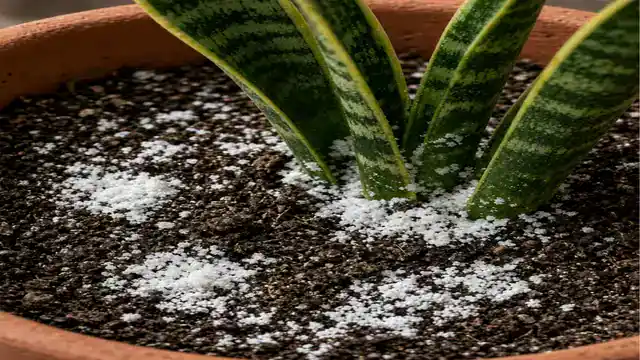
Snake plants are light feeders by nature. They come from environments with low nutrient levels, so strong or frequent fertilizer applications can leave excess salts in the soil. These salts interfere with water uptake, and the leaf tips — the farthest point from the roots — often show the damage first as dry, crispy browning.
Common contributing factors include:
- Applying fertilizer to dry soil
- Using full-strength fertilizer
- Feeding during fall or winter
- Not flushing the soil for long periods
For a full overview of safe feeding practices, see my guide: Best Fertilizer for Snake Plants.
How to Fix Snake Plant Brown Tips After Fertilizing
1. Stop all fertilizer
Do not add any more until the plant shows clear signs of recovery and new growth.
2. Flush the soil thoroughly
Take the plant to a sink or outdoor area. Water slowly with room-temperature plain water (filtered or rainwater is preferable) until excess water drains freely from the bottom. Continue until the potting mix is thoroughly saturated and excess water has drained.

Do not repeat aggressive flushing if the pot has poor drainage or the plant is already sitting in wet soil — this can create new problems. Let the plant drain completely and avoid leaving it in standing water.
3. Check drainage and roots if needed
If the soil has a heavy white crust or the plant was severely over-fertilized, gently inspect the roots. Healthy roots are firm. Soft or black roots may indicate secondary issues. In that case, refer to my How to Treat Root Rot in Houseplants guide and consider fresh, well-draining mix (see Snake Plant Soil).
4. Trim the brown tips (optional)
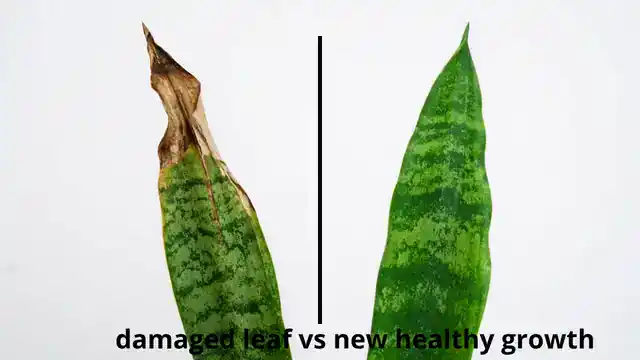
Use clean, sharp scissors. Cut just above the brown area at a slight angle. The damaged tissue will not turn green again, but removing it improves appearance.
5. Adjust watering and environment
Allow the soil to dry out more thoroughly between waterings. Place the plant in bright, indirect light and keep temperatures stable. For detailed watering guidance, see How Often to Water Snake Plants.
Tools That Can Help Prevent Fertilizer Burn
A few practical items make diagnosis and prevention easier without changing your routine much:
- A simple soil moisture meter helps you avoid watering (or fertilizing) when the mix is still wet.
- A balanced liquid houseplant fertilizer used at reduced strength gives you better control.
- A watering can with a controlled spout makes thorough but gentle flushing easier.
- Clean pruning scissors for neat tip trimming.
These are tools that support the steps above rather than replace good observation.
How to Prevent Brown Tips After Fertilizing
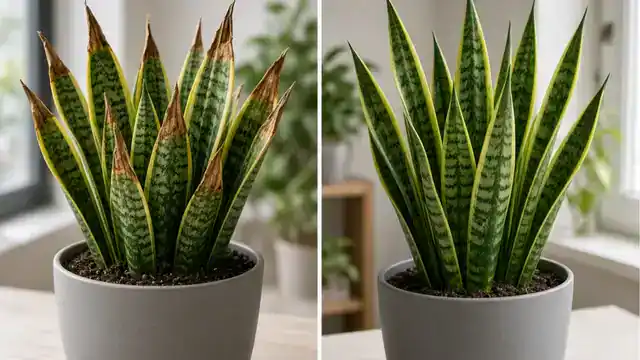
- Avoid fertilizing a newly purchased snake plant immediately. Give it time to acclimate and check whether the potting mix already contains fertilizer.
- After repotting, wait before fertilizing if you used a fresh mix that already contains nutrients.
- Use a balanced fertilizer at a reduced strength, following the product label and your plant’s growth conditions. A conservative approach (¼ to ½ of the recommended rate) works well for most snake plants.
- Feed only during active growth (typically spring and summer).
- Always water the plant first, then apply diluted fertilizer.
- Flush the soil periodically during the growing season to prevent salt buildup.
- Skip fertilizer completely in fall and winter.
This approach aligns with the care principles in my How to Care for Snake Plants guide and the broader Best Fertilizers for Indoor Plants roundup.
Related Snake Plant Issues
Brown tips sometimes appear alongside other problems. These guides may help:
- Yellow leaves → How to Fix Yellow Leaves on Snake Plant
- Drooping → Snake Plant Drooping
- Overall troubleshooting → Snake Plant Problems
- Winter care → Snake Plant Winter Care
- Repotting → How to Repot a Snake Plant
Frequently Asked Questions
Yes. Excess fertilizer or salt buildup is a recognized cause of brown, crispy tips, especially when the plant is fed too strongly or too often.
Fertilizer-related tips are usually dry and crispy and often appear soon after feeding, sometimes with white residue on the soil. Overwatering more often produces soft, yellowing leaves and soil that stays wet. Looking at timing, soil moisture, and the texture of the brown area helps differentiate the two.
Yes. As long as the base remains firm and new growth appears, the plant typically recovers. Existing brown tips will not turn green, but new leaves should be healthy.
You can. It is mainly for appearance and does not harm the plant when done cleanly.
Wait until the plant shows clear recovery and new growth, then resume only during the growing season at reduced strength.
Final Thoughts
Snake plants are resilient once excess salts are managed and feeding is kept light. Focus on observation, thorough but careful flushing, and conservative fertilizing, and new growth usually comes in clean.
If your plant is still struggling after these steps, feel free to leave a comment with details — I read them and reply when possible.