
Best Hanging Plants for Indoors + Styling Tips

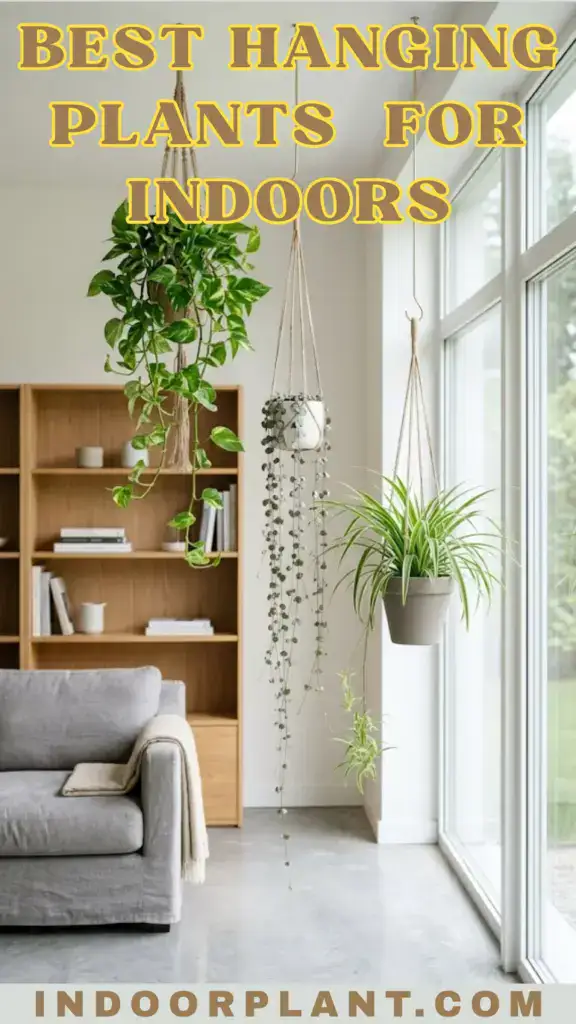
Hanging plants are one of the easiest ways to add greenery without using valuable floor space.
Their trailing stems bring movement to shelves, windows, walls, and empty corners, while hanging planters can make a small room feel more layered.
The best hanging plant depends on more than appearance, though. Consider light, watering needs, humidity, and the amount of space available for trailing growth.
Here are some of the best options for indoor spaces.
1. Pothos
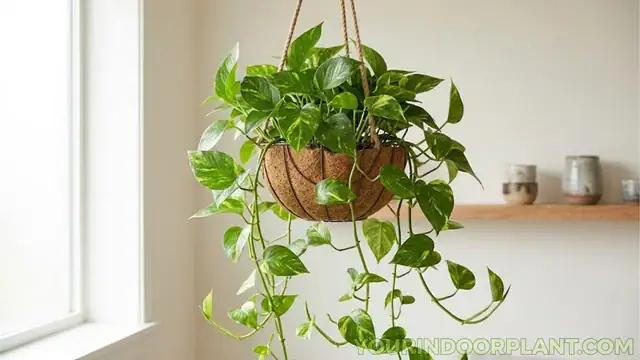
Botanical name: Epipremnum aureum
Pothos is one of the easiest trailing houseplants for beginners.
It grows long vines and can tolerate a range of indoor conditions, although brighter indirect light generally supports stronger growth and better variegation in variegated varieties.
Popular choices include:
- Golden pothos
- Marble Queen
- Neon pothos
Pothos works particularly well in hanging baskets because its vines naturally cascade downward.
2. Heartleaf Philodendron
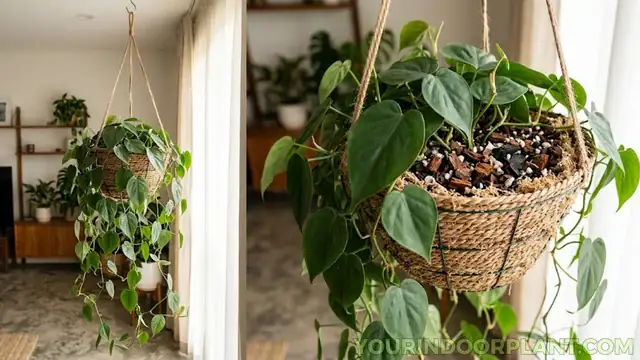
Botanical name: Philodendron hederaceum
Heartleaf philodendron produces soft, heart-shaped leaves along trailing stems.
It works well in:
- Hanging baskets
- Bookshelves
- Wall shelves
- Plant stands
Give it bright, indirect light when possible and allow the growing medium to dry somewhat between waterings.
3. String of Pearls
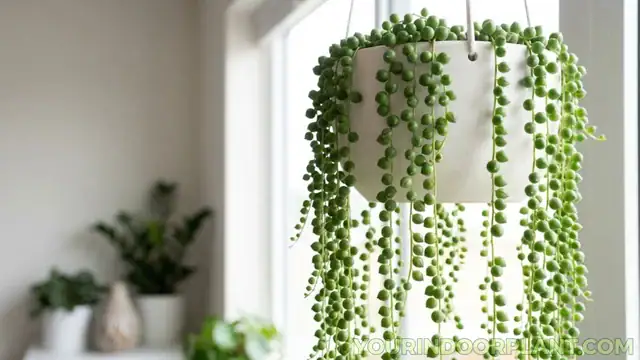
Botanical name: Curio rowleyanus
String of pearls has distinctive bead-like leaves arranged along long trailing stems.
Unlike pothos and philodendron, it needs much brighter light and more careful watering.
A bright window is usually a better location than a dim corner.
Allow the growing medium to dry between waterings and use a container with good drainage.
4. Spider Plant
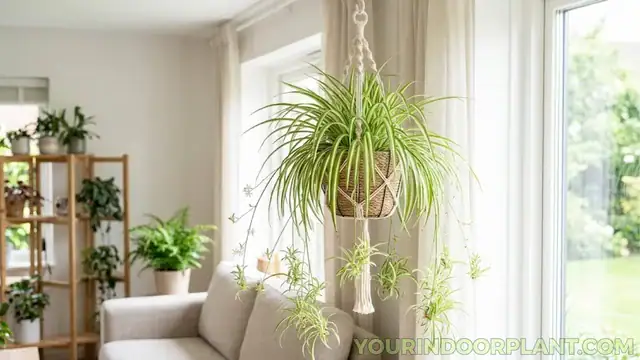
Botanical name: Chlorophytum comosum
Spider plants are particularly attractive in hanging baskets because they produce long stems carrying small plantlets.
They are adaptable and relatively forgiving, making them a practical option for beginners.
Bright indirect light is ideal, although spider plants can adapt to somewhat lower-light conditions.
5. String of Hearts
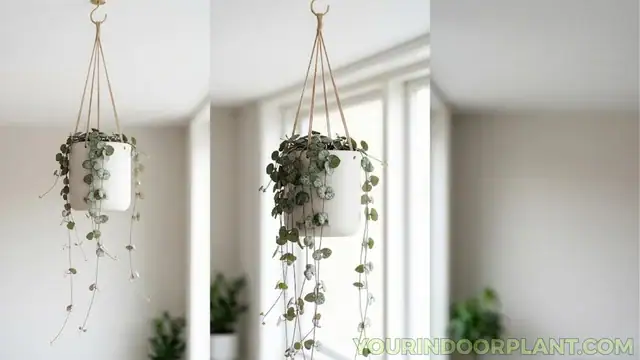
Botanical name: Ceropegia woodii
String of hearts produces small heart-shaped leaves along thin trailing vines.
Its delicate appearance makes it especially effective in minimalist hanging planters.
Give it bright indirect light and avoid keeping the soil constantly wet.
6. Boston Fern
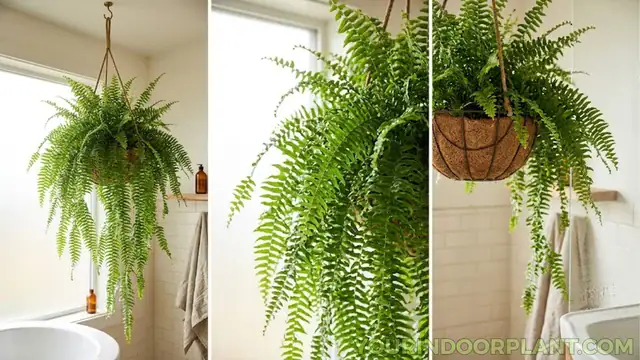
Botanical name: Nephrolepis exaltata
Boston fern creates a much fuller appearance than many trailing plants.
Its arching fronds work beautifully in hanging baskets, but it generally requires more consistent moisture and humidity than pothos or philodendron.
It can be a good choice for a naturally humid bathroom with sufficient light.
How to Choose the Right Hanging Plant
Don’t choose a hanging plant based only on its appearance. Ask these questions first:
How Much Light Does the Location Get?
- Bright windows can support plants such as string of pearls and string of hearts.
- Lower-light areas are generally better suited to plants such as pothos and heartleaf philodendron.
How Often Can You Water?
- If you sometimes forget to water, choose a plant with more forgiving moisture requirements.
- If you enjoy regular plant care, a Boston fern may be worth the additional attention.
How Much Space Does the Plant Have?
- Some plants eventually produce very long vines.
- Make sure there is enough room for the growth without the foliage interfering with doors, windows, walkways, or furniture.
How to Style Hanging Plants
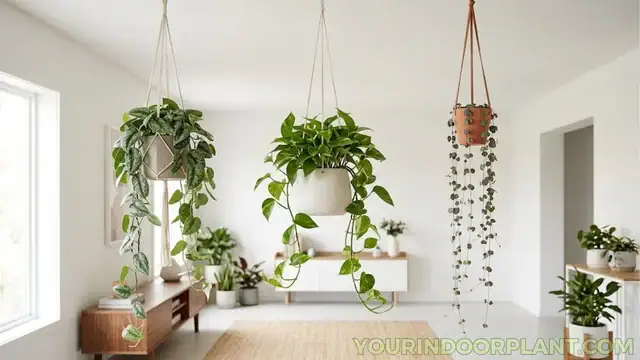
1. Vary the Hanging Heights:
- If you’re using multiple hanging plants, avoid placing every basket at exactly the same height.
- Staggering them creates a more natural composition.
2. Let Vines Grow Naturally:
- Don’t feel the need to keep every vine perfectly symmetrical.
- Different lengths and directions often create a more relaxed appearance.
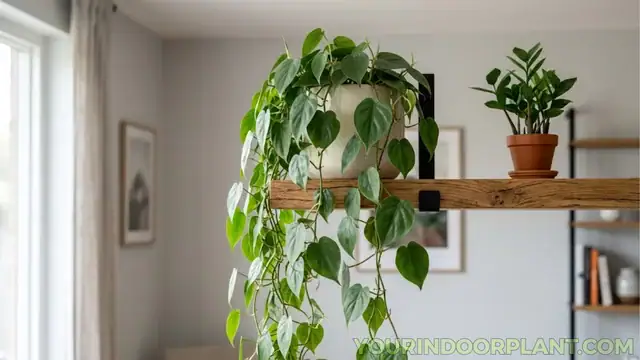
3. Combine Hanging Plants With Shelves:
- A trailing plant positioned on the edge of a shelf can create a similar effect without requiring a ceiling hook. This is especially useful for renters or anyone who doesn’t want to drill into the ceiling.
4. Keep the Planter Simple:
- Hanging plants already create visual movement.
- Simple containers often allow the foliage to remain the main feature.
Hanging Plants in Small Rooms
Hanging plants are particularly useful when floor space is limited. Try:
- A hanging planter beside a window
- A trailing plant above a desk
- A pothos on a wall shelf
- Two plants at different heights in an unused corner
- A trailing plant above a bookcase
Always make sure hooks and mounting hardware are appropriate for the weight of the planter, including wet soil.
Basic Care Tips
Most indoor hanging plants benefit from:
- Appropriate light
- Containers with drainage
- Watering based on soil moisture rather than a rigid calendar
- Good airflow
- Occasional pruning when vines become too long
Remember that plants hanging near ceilings can sometimes dry differently from plants sitting on the floor. Check the soil rather than assuming they need water on a fixed schedule.
Final Thoughts
Hanging plants are an effective way to add greenery without sacrificing floor space.
For an easy starting point, choose pothos or heartleaf philodendron. If your home has bright light and you’re comfortable with more specific care requirements, try string of hearts or string of pearls.
For more indoor styling inspiration, explore our indoor plant decor ideas and plant wall shelf ideas.