
Indoor Plant Decor Ideas That Transform Any Room
Indoor plants can completely change the feel of a room. They add texture, soften hard furniture lines, fill empty corners, and bring natural color into spaces that might otherwise feel flat.
But good plant decor is not simply about having more plants. The biggest difference usually comes from placement, scale, height, and how well the plants work with the rest of the room.
Whether you have a small apartment, a spacious living room, or just one empty corner, these indoor plant decor ideas can help you create a space that feels intentional without looking overcrowded.
Start With the Space You Have
Before buying another plant, look around the room and identify the areas that could benefit from greenery.
Plants can be used to:
- Soften an empty corner
- Add height beside furniture
- Fill an otherwise plain shelf
- Bring texture to a console or sideboard
- Create a focal point
- Make a reading nook feel more inviting
- Add vertical interest to a blank wall
Start with the space rather than the plant.
A large floor plant may be perfect for an empty corner, while a trailing plant might work better on a bookshelf.
Use Different Heights

One of the simplest ways to make a plant arrangement look more natural is to avoid placing everything at the same level.
Try combining:
- Tall plants on the floor
- Medium plants on stands, stools, or low furniture
- Small plants on shelves and tables
- Trailing plants on elevated surfaces
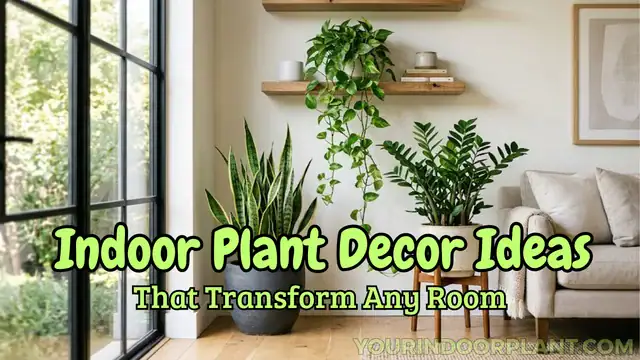
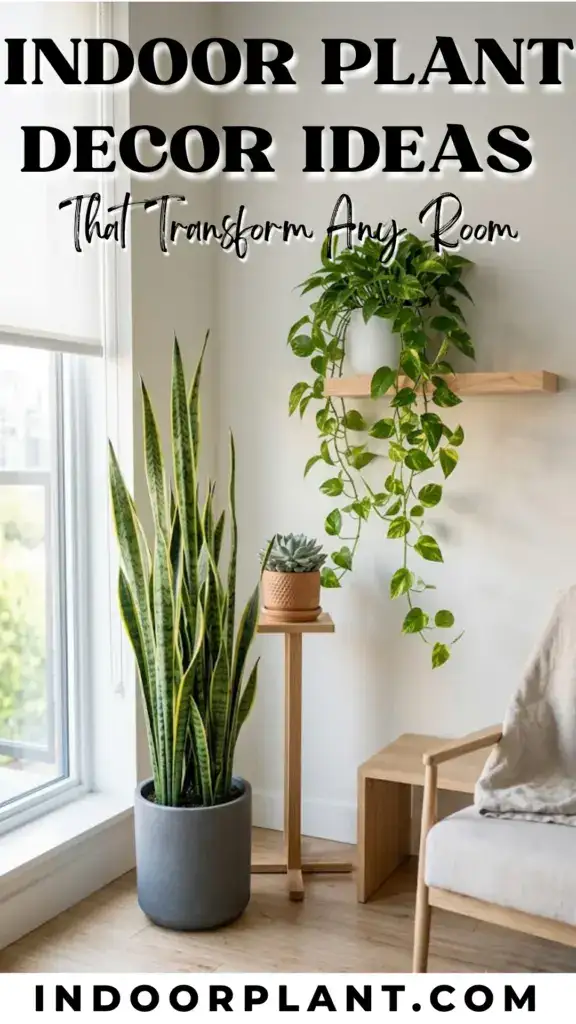
For example, a tall snake plant can anchor a corner while a smaller pothos sits on a nearby stand. A third plant can trail from a shelf above them.
The difference in height creates layers and keeps the arrangement from looking like a row of identical pots.
Create a Plant Corner
An unused corner can become one of the strongest decorative features in the room.
Start with one larger plant as the anchor. Then add two or three smaller plants at different heights.
A simple combination could be:
- One tall snake plant
- One medium ZZ plant on a stand
- One trailing pothos on a shelf
You don’t need dozens of plants. Three well-positioned plants can often create more visual impact than a collection scattered randomly around the room.
Style Shelves Without Overcrowding Them
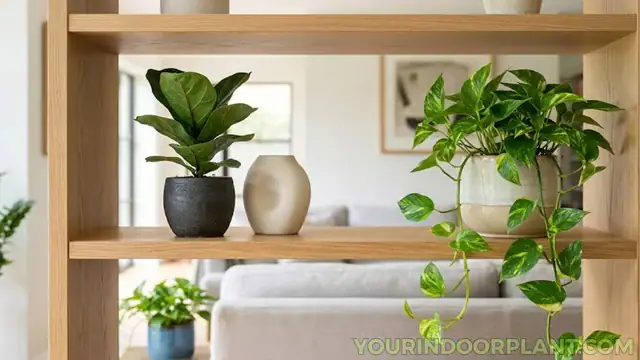
Shelves are excellent for indoor plants, especially when floor space is limited.
A useful arrangement is:
- One upright plant
- One trailing plant
- One non-plant object such as a book or ceramic piece
Leave some empty space between the objects.
This negative space is important. When every inch of a shelf is filled, the plants can lose their visual impact.
Trailing plants such as pothos, heartleaf philodendron, and string of hearts can also soften the edges of hard shelving.
For more ideas, see our guide to the best hanging plants for indoors.
Choose Pots That Match the Room
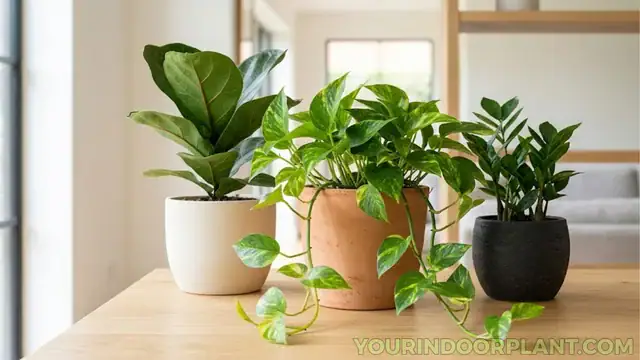
Plant containers are part of the decor, so they should work with the room rather than compete with it.
You don’t need every pot to match exactly. Instead, choose a limited combination of colors and materials.
For example, you could combine:
- Cream ceramic
- Natural terracotta
- Matte black
- Woven baskets
Try to repeat one or two materials throughout the room. This creates consistency without making the display look overly coordinated.
Use Plant Stands to Add Height
A plant stand can make a small plant look much more substantial.
It also allows you to create different levels without buying larger plants.
Plant stands work particularly well:
- Beside sofas
- In empty corners
- Near windows
- Beside bookcases
- In plant groupings
A wooden stand can add warmth to a room, while a simple metal stand can create a cleaner, more modern appearance.
For help choosing one, see our guide to the best indoor plant stands.
Decorate Around Natural Light
A beautiful plant arrangement is only useful if the plants can actually grow in the space.
Before placing a plant in a decorative location, consider its light requirements.
Bright-light plants such as eucalyptus and fiddle leaf figs generally need much brighter conditions than plants such as snake plants or ZZ plants.
If a location is visually perfect but too dark for the plant you want to use, choose a plant better suited to that light level rather than relying on appearance alone.
Make a Bathroom Feel More Natural
Bathrooms can be excellent locations for plants when they have enough natural light.
Humidity-loving plants can work particularly well on:
- Window ledges
- Shelves
- Small plant stands
- Hanging planters
Good options include pothos, spider plants, ferns, and some orchids.
However, humidity does not replace light. A completely dark bathroom is still a challenging environment for most living plants.
See our guide to the best plants for bathroom spaces for more options.
Use Mirrors to Increase Visual Impact
A mirror positioned near plants can make a small collection appear more substantial.
Instead of adding several more plants, try positioning an existing plant where its foliage is reflected in a nearby mirror.
This works particularly well in:
- Small apartments
- Entryways
- Bedrooms
- Narrow living rooms
Just make sure the mirror isn’t being used as a substitute for appropriate light.
Decorate Small Spaces Vertically
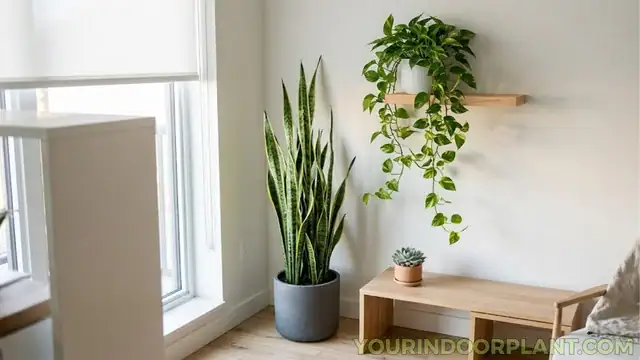
Small rooms don’t necessarily need fewer plants. They often need better use of vertical space.
Consider:
- Wall-mounted shelves
- Hanging planters
- Tall narrow plants
- Tiered plant stands
- Bookcases with trailing plants
Using vertical space keeps the floor clearer while still giving the room a layered appearance.
For a dedicated wall display, explore our plant wall shelf ideas.
Common Indoor Plant Decor Mistakes
Even attractive plants can make a room feel cluttered when they’re poorly arranged. Avoid these common mistakes:
1. Putting Every Plant at the Same Height: a collection of plants at identical heights can look flat. Introduce stands, shelves, and different plant sizes to create layers.
2. Using Too Many Pot Styles:
- A mixture of completely unrelated colors and materials can make the room feel chaotic.
- Choose a simple palette and repeat it.
3. Ignoring the Plant’s Light Requirements:
- Don’t move a plant into a dark corner simply because it looks good there.
- Decor should work with plant care requirements, not against them.
4. Filling Every Empty Space: empty space is part of good design. You don’t need a plant on every shelf, table, or windowsill.
5. Choosing Plants That Are Too Small:
- Tiny plants can disappear when placed on large furniture.
- Match the scale of the plant to the furniture and surrounding space.
A Simple Formula for Better Plant Decor
If you’re unsure where to start, use this basic formula:
One anchor + one medium plant + one trailing plant, for example:
Living room corner
- Tall rubber plant
- Medium ZZ plant on a stand
- Pothos trailing from a nearby shelf
Bedroom
- Medium snake plant
- Small peperomia
- Trailing heartleaf philodendron
Bathroom
- Small fern
- Pothos
- Spider plant
Adjust the combination according to your available light and space.
Final Thoughts
Good indoor plant decor isn’t about filling your home with as many plants as possible.
It’s about choosing the right plants for the space and arranging them with intention.
Start with one area. Vary the heights, leave some empty space, coordinate the containers, and make sure every plant receives the light it needs.
Once the basic arrangement works, you can expand gradually.
For more ideas, explore our guides to plant wall shelf ideas and best plants for bathroom.