
Plant Wall Shelf Ideas: How to Build a Beautiful Indoor Plant Display

The best plant wall shelf is not the one that holds the most plants. It is the one that gives your plants enough light, enough space to grow, and enough structural support to stay safely on the wall.
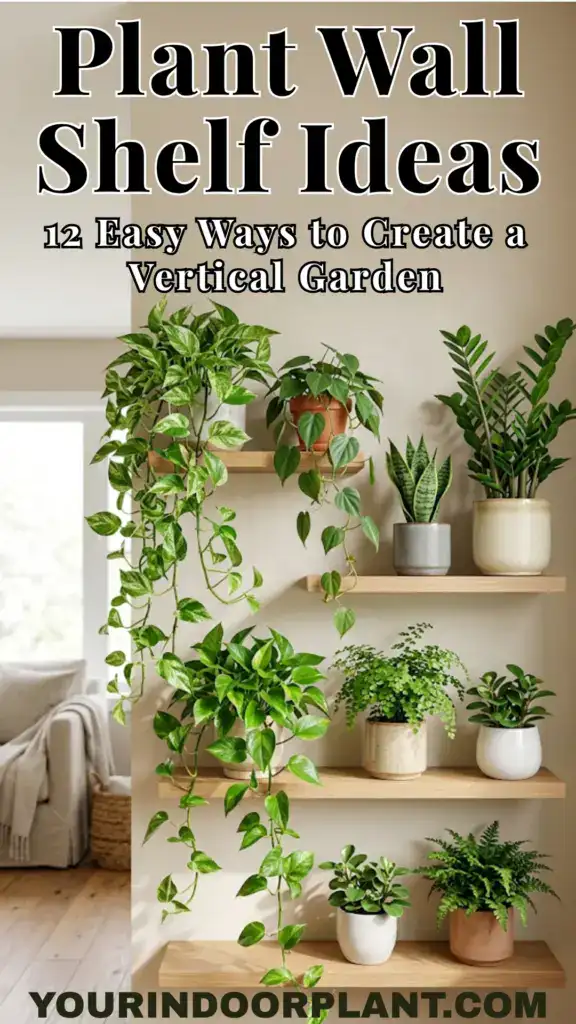
A few well-placed shelves can turn a blank wall into a living display without requiring a complicated vertical garden system.
But there is an important difference between designing a shelf that looks good in a photograph and creating one that works in a real home.
- Plants grow.
- Pots get heavier after watering.
- Trailing vines change shape.
And a shelf that looks perfectly balanced on installation day can become crowded six months later. Here is how to build a plant shelf display that works beyond the first photo.
Start with the Wall, Not the Plants
Choose the wall based on available light and structural support before deciding which plants you want.
Look at the wall at different times of day.
A wall that appears bright at noon may receive very little useful light in the morning or afternoon. You also need to consider what is behind the wall and how the shelves will be mounted.
For heavier pots, secure mounting into appropriate wall structure is far more important than choosing the perfect shelf color.
Choose the Right Shelf Layout
There isn’t one ideal arrangement. Different layouts work for different rooms.
One Long Shelf
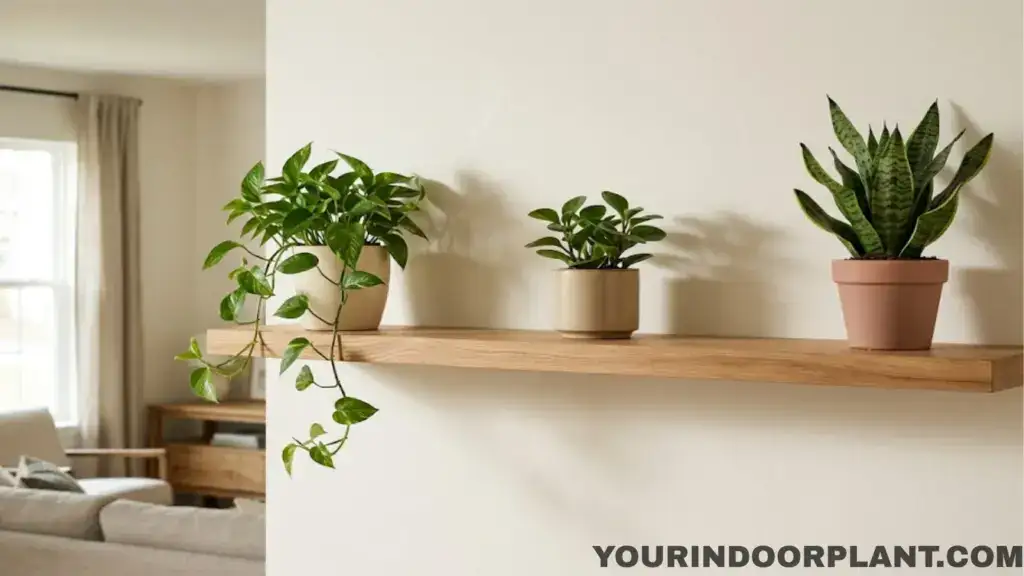
A single long shelf creates a clean, minimalist display. It works particularly well above:
- A desk
- A sideboard
- A console
- A low cabinet
Use a mixture of upright and trailing plants rather than filling every inch.
Leave intentional empty space between groups.
Staggered Shelves

Staggered shelves create more movement. Instead of aligning every shelf vertically, offset them slightly.
This works particularly well when you want vines to travel downward without immediately covering the plant below.
Grid Arrangement
Several smaller shelves can create a gallery-wall effect.
This gives you more flexibility because each plant has its own space.
However, avoid placing every shelf at exactly the same distance from the others if the result starts looking too rigid.
Corner Plant Shelves
Corner shelving is particularly useful in small rooms. It takes advantage of vertical space while leaving the floor relatively clear.
Just make sure the plants on the shelves receive enough usable light.
Choose Plants According to Shelf Position
The plant’s location should determine the plant—not the other way around.
For higher shelves, trailing plants are often the easiest choice. Good options include:
- Pothos
- Heartleaf philodendron
- String of hearts
- Spider plant
For lower or more accessible shelves, consider compact upright plants such as:
- Peperomia
- Small snake plants
- ZZ plants
- Compact philodendrons
The important thing is to consider the plant’s mature growth habit. A tiny pothos cutting may look perfect today. A year later, the vines may cover the entire wall. That isn’t necessarily a problem—it just needs to be part of the design.
Use Three Types of Plant Form
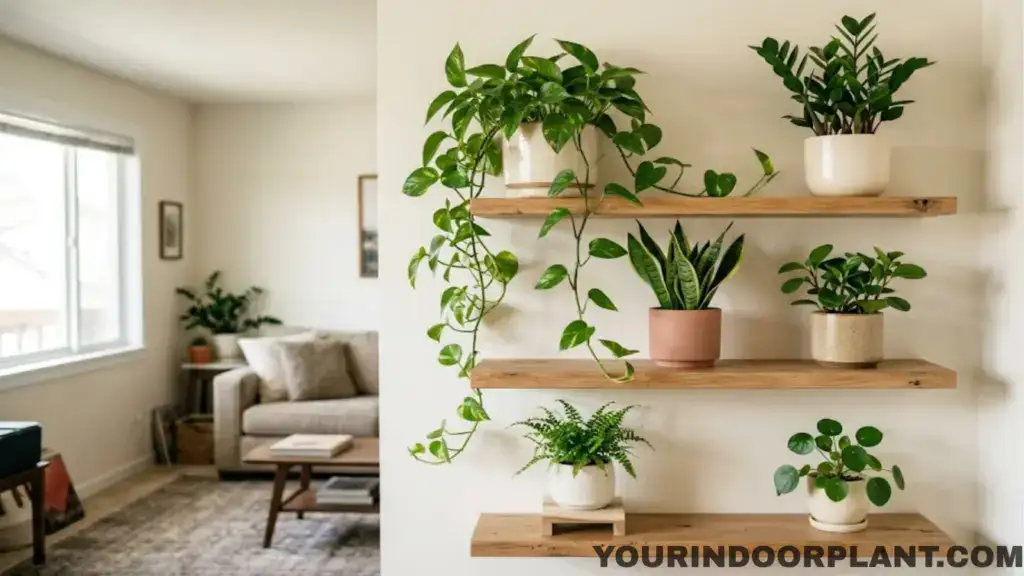
The easiest way to make a plant shelf look intentional is to combine different growth habits.
Try combining:
- Upright plants These create structure.
- Trailing plants These soften the edges and introduce movement.
- Compact or bushy plants These fill visual gaps without dominating the arrangement.
A shelf containing six plants with identical growth habits tends to look repetitive.
A shelf containing three different forms usually feels much more dynamic.
Don’t Put Every Plant Directly Next to Another
Empty space is part of the design.
One of the easiest mistakes is trying to turn a shelf into a miniature jungle immediately. Instead, start with fewer plants. For example:
- One trailing plant
- One upright plant
- One compact plant
- One decorative object
Then allow the plants to grow into the arrangement. This gives you room to adjust the display later.
Use Pots to Create Cohesion
You don’t need identical pots, but you do need some visual connection between them.
A simple approach is to choose two or three related colors. For example:
- Cream + terracotta
- White + natural wood
- Black + neutral ceramic
- Green + beige
You can also mix materials while keeping the colors similar. This creates variety without making the shelf look chaotic.
Vary Pot Height
If every pot sits at exactly the same height, the shelf can look flat. You can create subtle differences using:
- Small risers
- Wooden blocks
- Decorative books
- Different pot shapes
But don’t place unstable objects under heavy pots. The goal is visual variation without compromising safety.
Think About Watering Before You Install the Shelves
A beautiful plant shelf becomes frustrating if you cannot water it easily.
This is something worth considering before installation. Ask yourself:
- Can I reach every pot?
- Can I remove the plant easily?
- Where will excess water go?
- Can I inspect the soil?
- Can I rotate the plants?
- Can I clean underneath the pots?
If a shelf is too high to maintain comfortably, you’ll eventually avoid watering or checking the plants.
That is a design failure, not a plant-care failure.
Drainage Matters on Plant Shelves
Every shelf plant should have a sensible drainage strategy.
The safest approach is usually to keep the plant in a nursery pot with drainage holes and place that inside a decorative cachepot.
After watering, allow excess water to drain before returning the plant to the shelf.
Don’t rely on a decorative container with no drainage as if it were automatically safe.
And don’t place a dripping pot directly onto a wooden shelf.
Use a waterproof saucer or another appropriate protective layer.
How Much Weight Can a Plant Shelf Hold?
Never choose a shelf based only on its advertised weight capacity without considering how it is mounted.
The actual load includes:
- Shelf weight
- Pot weight
- Wet potting mix
- Plant weight
- Any decorative objects
Wet soil can be significantly heavier than dry soil.
For that reason, a shelf that comfortably holds an empty ceramic pot may be unsuitable once the pot is filled and watered.
Follow the manufacturer’s load rating and installation instructions, and make sure the mounting hardware is appropriate for your wall type.
For heavy displays, secure the shelf into suitable structural support rather than relying solely on lightweight drywall anchors.
Best Plants for a Plant Wall Shelf
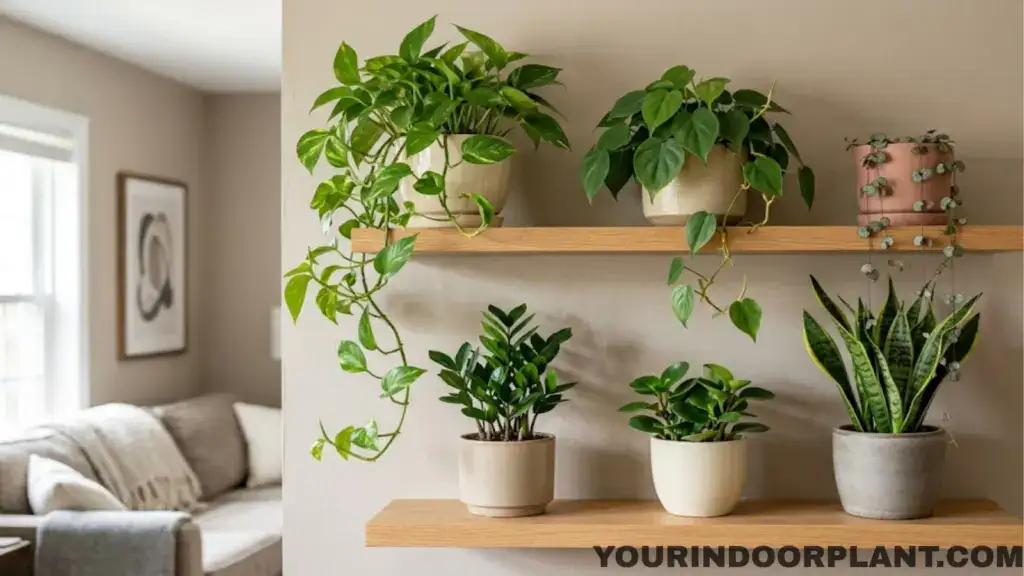
Here is a practical starting point:
| Plant | Growth habit | Typical shelf position |
|---|---|---|
| Pothos | Trailing | Upper shelf |
| Heartleaf philodendron | Trailing | Upper/middle |
| String of hearts | Trailing | Bright upper shelf |
| Spider plant | Arching/trailing | Middle/upper |
| Peperomia | Compact | Middle shelf |
| Small snake plant | Upright | Lower/middle |
| ZZ plant | Upright | Lower/middle |
| Fern | Full/trailing | Bright, humid location |
The final choice should always follow your actual light conditions. For example, a string of hearts may look beautiful cascading from a high shelf, but it needs considerably more light than a pothos.
Create a Focal Point
Every good plant display needs somewhere for the eye to land.
Instead of making every plant equally prominent, choose one focal plant. It could be:
- A larger peperomia
- A mature pothos
- A distinctive philodendron
- A compact snake plant
- A plant with unusual foliage
Then use smaller plants around it.
This is usually more effective than placing seven equally sized plants across a shelf.
Don’t Hide the Plants Behind Decorations
Plants should remain the primary visual element.
Books, artwork, candles, baskets, and ceramics can complement the display, but don’t allow decorative objects to compete with the foliage.
A useful rule is to ask: “Does this object improve the plant display, or am I simply filling an empty space?“
If it’s the second one, leave the space empty.
Plant Shelf Ideas for Small Apartments
Vertical shelves are especially useful when floor space is limited.
Instead of adding more furniture, use the wall. Try:
- A narrow floating shelf
- A small corner shelf
- A two- or three-level staggered arrangement
- One shelf above a desk
- A plant shelf above a low cabinet
Trailing plants are particularly useful because their growth occupies vertical space without requiring additional floor area.
Plant Shelves in Bathrooms
Bathroom shelves can work well for plants that appreciate the room’s humidity, but the same rule still applies: Light comes first.
A bathroom shelf near a bright window can support plants such as Fittonia, pothos, spider plants, and some ferns. A shelf in a completely dark bathroom is a different situation.
Humidity does not compensate for a lack of light. If the bathroom has no window, consider supplemental lighting or use artificial greenery.
How to Make a Plant Shelf Look Less “Perfect”
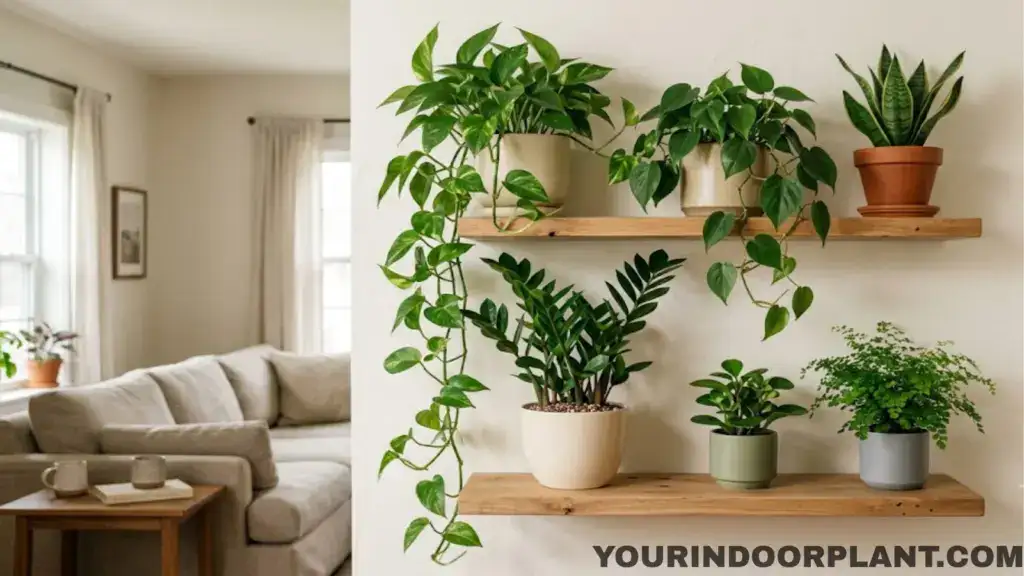
A slightly irregular arrangement often looks more natural than perfect symmetry. Try:
- Different pot sizes
- Unequal plant heights
- One trailing plant extending farther than another
- Small gaps
- A mixture of leaf shapes
Plants themselves are irregular. Allowing some variation usually makes the display feel more like a living collection and less like a showroom.
Common Plant Wall Shelf Mistakes
- Installing shelves before checking light: The wall may look perfect but provide inadequate light.
- Overloading the shelves: More plants do not automatically create a better display.
- Ignoring mature plant size: A small plant can eventually become much larger.
- Forgetting watering access: If you cannot comfortably reach the plant, maintenance becomes difficult.
- Using unstable risers: Never sacrifice stability for a visual effect.
- Ignoring water damage: Wooden shelves and repeated water spills are not a good combination.
- Treating low-light plants as no-light plants: This is particularly important for bathrooms and interior walls.
How to Arrange a Plant Wall Step by Step
If you’re starting from scratch, I recommend this sequence:
- Choose the wall.
- Observe its light throughout the day.
- Install shelves appropriate for the wall structure and expected load.
- Choose one focal plant.
- Add one trailing plant.
- Add one or two compact plants.
- Adjust the heights and spacing.
- Add decorative elements only if the shelf still needs them.
- Water the plants and check whether the shelf remains stable.
- Reassess the arrangement after the plants have grown.
That last step is important: a plant wall should evolve.
Final Thoughts
The best plant wall shelf ideas combine good plant care with good interior design.
Don’t start by asking how many plants you can fit onto the wall. Start by asking how much light the wall receives, how much weight the shelves need to support, and how easily you can maintain the plants. Then build the display around those limitations.
A simple shelf with three healthy, well-positioned plants will usually look better—and remain easier to care for—than a crowded wall that was designed purely for appearance.
For more ways to style plants throughout your home, explore our indoor plant decor ideas. If you’re working with trailing varieties, see our guide to the best hanging plants for indoors.