
ZZ Plant Brown Tips: A Complete Diagnostic & Rescue Guide
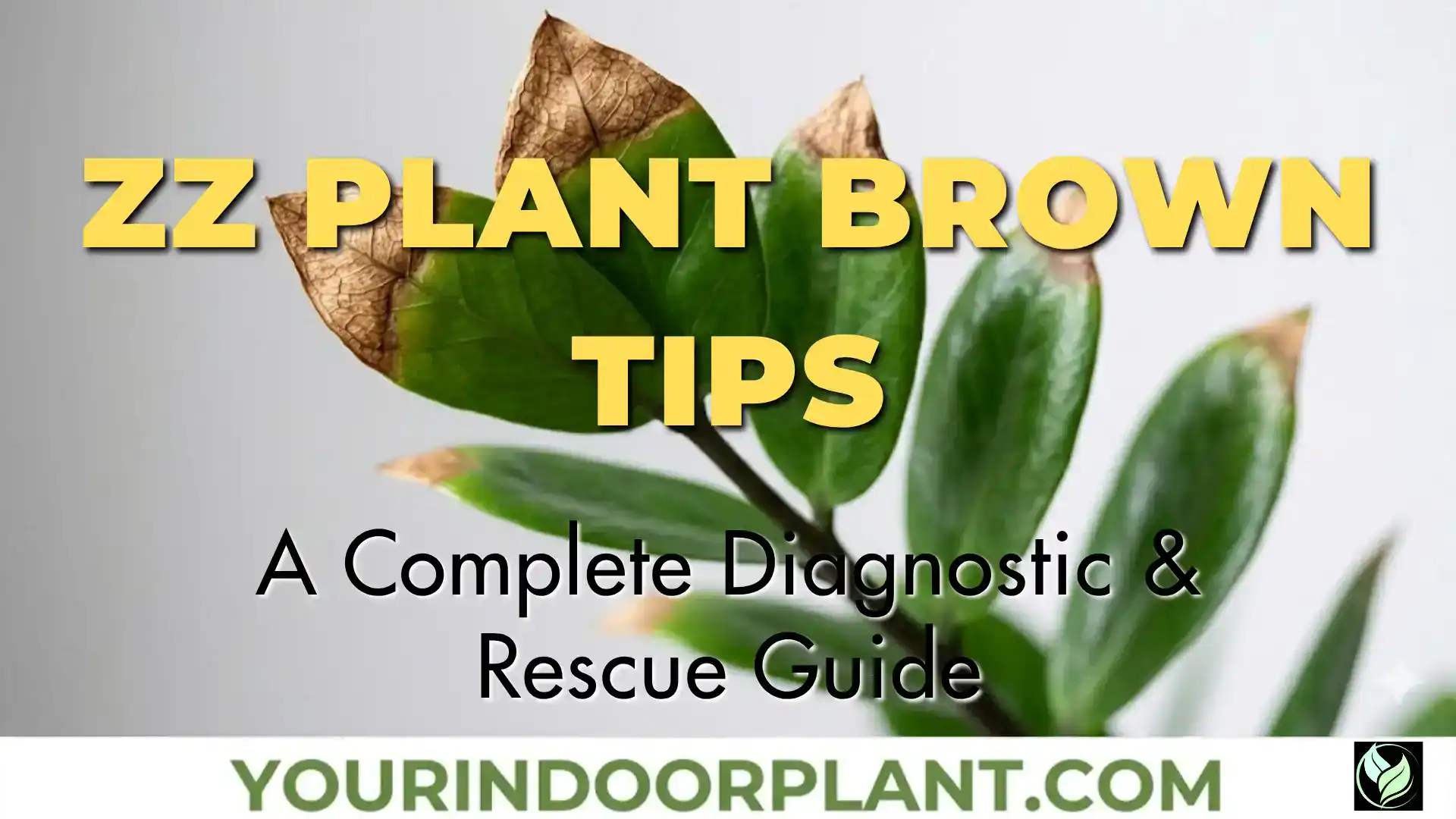
You’ve done everything right — or so you thought. Your ZZ plant is sitting in a decent spot, you haven’t been overwatering it, and yet here you are, staring at crispy brown tips creeping along those beautiful glossy leaves. It’s frustrating, especially on a plant that’s supposed to be practically indestructible.
Here’s the reassuring truth: brown tips on a ZZ plant are almost never a sign of a dying plant. In fact, the ZZ plant is one of the most forgiving houseplants you can own. But brown tips are a signal — and once you know what that signal means, fixing it is usually straightforward.
In 90% of cases, brown tips on ZZ plants come down to one of three things: low humidity, salt buildup in the soil from fertilizer or tap water, or direct sun exposure. We’ll cover all of these and more in detail below.
If you want the full picture on ZZ plant care, start with our Ultimate ZZ Plant Care Guide. But if brown tips are your specific problem right now, read on — this guide will get you to the answer fast.

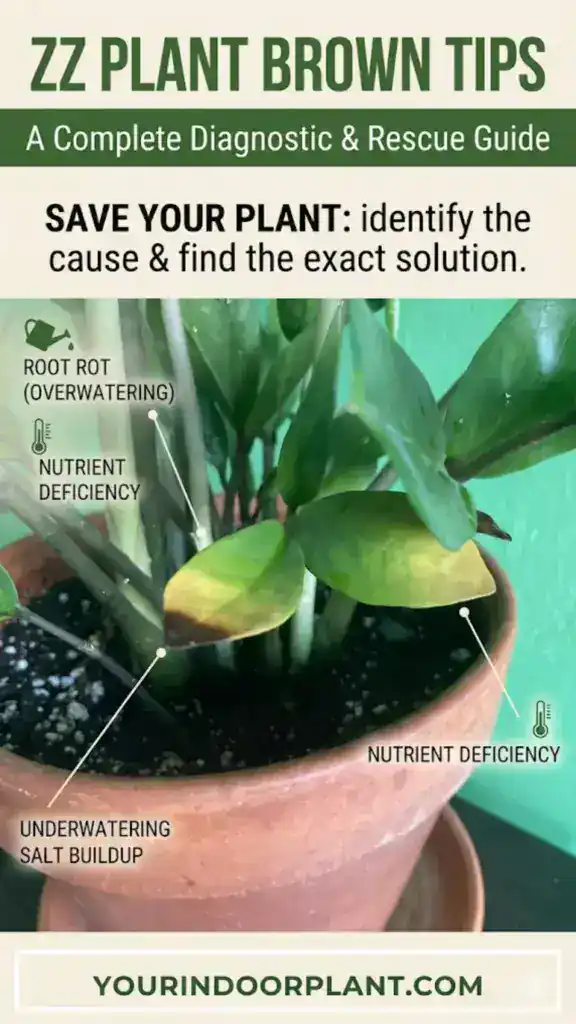
The “Crime Scene” — Reading the Brown Tips Accurately
Before you make any changes, take a close look at how and where the browning is happening. This is your most valuable diagnostic tool.
Ask yourself:
- Where exactly are the brown tips? Are they only at the very tip of each leaflet, or are the edges also browning (marginal browning)? Tips-only usually points to humidity or salt issues. Edge browning combined with tip browning often suggests more severe dehydration, root damage, or salt toxicity.
- Are the brown tips dry and crispy, or soft and mushy? Crispy = moisture or salt issue. Soft and brown = overwatering or rot (less common for tips specifically, more common lower on the plant).
- How many leaves are affected? A few tips on the outer, older leaves = likely normal stress or minor humidity issue. Tips browning across the entire plant simultaneously = a more systemic problem.
- Did it start suddenly or develop gradually? Sudden browning after a move suggests a change in light or temperature. Gradual browning over weeks or months points to a chronic care issue — salt buildup being a prime suspect.
- Have you recently fertilized or changed your water source? If yes, salt accumulation is very likely.
- Where is the plant positioned? Near a heating vent, air conditioning unit, or window receiving direct sun? All of these dry the leaf tips aggressively.

Cause #1: Low Humidity (Most Common)
ZZ plants are drought-tolerant, not dry-air-tolerant. There’s an important distinction here. They can go weeks without water because of their water-storing rhizomes — but the air around their leaves still needs some moisture. In very dry environments, the leaf tips lose moisture faster than the roots can replace it, and the tips die off and turn brown.
This is especially common during winter when central heating systems run constantly, dropping indoor humidity levels from a comfortable 40–50% down to 20–30% or even lower. If your brown tips appeared or worsened in winter, this is almost certainly why.
How to confirm it:
- The rest of the leaf looks healthy — glossy, firm, green
- The browning is limited to the very tips, not spreading across the leaf surface
- You live in a dry climate, or your home uses central heating or air conditioning heavily
- A cheap hygrometer (humidity meter) reads below 35% in the room where your ZZ plant lives
Step-by-step fix:
- Don’t mist the leaves. It’s tempting, but misting provides a brief humidity boost that evaporates within minutes — and sitting water on leaves can actually invite fungal spots in low-airflow conditions. It doesn’t solve the problem.
- Use a pebble tray. Fill a shallow tray with pebbles and water. Set the pot on top — the pot should sit above the waterline, not in it. As the water evaporates, it raises humidity around the plant passively.
- Group your plants together. Plants release moisture through transpiration. Grouping several houseplants creates a more humid microclimate around all of them.
- Use a humidifier nearby. A small cool-mist humidifier placed 2–3 feet from your plant is the most effective and consistent solution. Aim for 40–60% relative humidity.
- Move it away from vents. Heating and cooling vents blast dry air directly. Even a foot or two of distance makes a significant difference.
Pro Tip: Once brown, those tips won’t turn green again — the tissue is dead. But once you correct the humidity, the browning will stop progressing. You can trim the dead tips with sterilized scissors at a slight angle to mimic the natural leaf shape. This makes the plant look clean while it puts out new healthy growth.
Prevention: In winter, run a humidifier in the room or use a pebble tray consistently. Check your humidity periodically — if you can feel how dry the air is, your ZZ plant definitely can too.
Cause #2: Salt Buildup from Fertilizer or Tap Water
This is one of the most overlooked causes of brown tips, not just in ZZ plants but in houseplants generally. Over time, mineral salts from tap water and fertilizers accumulate in the soil. These salts draw water out of the root cells through osmosis — essentially dehydrating the roots even when the soil appears moist. The leaf tips, being the farthest point from the root system, are the first to show the damage.
How to confirm it:
- White, crusty deposits on the soil surface or on the outside of terracotta pots
- Brown tips that have been getting gradually worse despite normal watering and decent humidity
- You’ve been fertilizing regularly (even correctly) for a long time without ever flushing the soil
- You water exclusively with hard tap water
Step-by-step fix:
- Flush the soil thoroughly. Take the pot to a sink or outdoors. Water slowly and deeply — use approximately three to four times the pot’s volume of water. Let it drain completely. This leaches accumulated salts out through the drainage holes.
- Repeat this flush once. One thorough flush is usually enough to reset. Let the soil dry normally before watering again.
- Switch to filtered or rainwater if possible. Tap water in many areas is high in chlorine, fluoride, and mineral salts. Letting tap water sit out overnight in an open container allows some chlorine to dissipate, though it doesn’t remove mineral content. If your tap water is very hard, a Brita-style filter or collected rainwater makes a noticeable difference.
- Reassess your fertilizing schedule. ZZ plants are light feeders. Half-strength balanced liquid fertilizer, once a month in spring and summer, is plenty. If you’ve been fertilizing more frequently, cut back.
Common Mistake: Adding more fertilizer when a plant looks stressed, thinking it needs more nutrition. If salt buildup is the actual problem, more fertilizer pours more salt onto an already struggling root system and accelerates the damage. Always flush the soil before diagnosing a nutrient deficiency.
Prevention: Flush the soil every 3–4 months as a routine maintenance step — even if you don’t see white deposits yet. This is especially important for plants in terracotta pots, where salt deposits on the outer surface give you an early warning, and for plants in plastic or glazed pots, where salts accumulate invisibly.

Cause #3: Direct Sun or Heat Stress
ZZ plants are adapted to dappled shade and indirect light. Exposure to intense direct sunlight — particularly the harsh midday or afternoon sun through a south or west-facing window — heats the leaf surface rapidly and causes the tips and edges to bleach and turn brown.
Similarly, positioning a ZZ plant directly above or beside a radiator, heating vent, or heat-emitting appliance creates a localized hot, dry zone that scorches leaf tips progressively.
How to confirm it:
- The browning appears on the side of the plant facing the light or heat source
- Tips on leaves closest to the window or vent are most affected
- The brown areas may have a slightly bleached or pale yellow color before fully browning
- The damage worsened during summer or when heating was turned on
Step-by-step fix:
- Move the plant. Relocate it 5–8 feet back from a south or west-facing window, or position it beside an east-facing window where it receives gentle morning light only.
- Add a sheer curtain to filter intense sunlight if moving the plant isn’t practical.
- Check for heat sources. Ensure at least 2–3 feet of clearance from any radiator, heating vent, or heat-generating appliance.
Prevention: ZZ plants thrive in bright to medium indirect light. If you can see direct sunlight falling on the leaves for more than an hour a day, that’s too much — regardless of whether your plant seems to be tolerating it initially. Sun damage is cumulative.
Cause #4: Underwatering
Because ZZ plants are drought-tolerant, underwatering tends to go unnoticed for longer than it should. When the rhizomes have exhausted their water reserves and the soil has been bone dry for weeks, the plant starts to show drought stress — and leaf tips are among the first casualties.
How to tell it apart from humidity or salt issues:
- Soil is completely dry, bone hard, and pulling away from the pot edges
- Stems feel slightly soft or shriveled — the rhizomes are depleted
- Browning is on the tips and there’s an overall dullness or slight droop to the leaves
- The pot feels very light when you lift it
Step-by-step fix:
- Bottom-water the plant. Set the pot in a basin filled with a few inches of room-temperature water for 20–30 minutes. This allows the soil and rhizomes to rehydrate slowly from the bottom up, which is more effective than top-watering when the soil is extremely dry and hydrophobic.
- Drain completely. Remove from the basin and allow all excess water to drain.
- Adjust your watering interval. If you’ve been stretching to 8–10 weeks between waterings, pull back to 4–6 weeks — and always finger-test the soil at 2 inches deep before watering.
Pro Tip: Extremely dry soil can become hydrophobic — water poured from the top runs straight down the gap between the soil and the pot wall without actually penetrating the root zone. This gives you the false impression that you’ve watered when the roots are still dry. Bottom-watering solves this problem entirely.
Cause #5: Physical Damage and Leaf Handling
ZZ plant leaves are glossy and beautiful, but they’re also surprisingly sensitive to physical contact. Frequent handling, leaves brushing against furniture or walls, or even cleaning the leaves too roughly can damage the cells at the tips and edges, leading to brown marks that resemble — but aren’t caused by — environmental stress.
How to confirm it:
- Browning is on specific leaves that are in contact with a surface (wall, furniture, window frame)
- The marks have a slightly crushed or irregular edge rather than the smooth browning of a tip-dying gradually
- Only certain leaves are affected, not a consistent pattern across the whole plant
What to do:
- Reposition the plant so leaves aren’t touching walls, window frames, or other surfaces
- When cleaning leaves (to remove dust), use a soft damp cloth and wipe gently in one direction — don’t rub back and forth
- Avoid squeezing or bending leaves when moving the plant
Cause #6: Root Damage or Root Bound Conditions
If a ZZ plant has been in the same pot for many years without repotting, the roots and rhizomes can become severely compacted. In this state, the root system can no longer absorb water and nutrients efficiently regardless of how well you water, and leaf tips start to brown as a result of this internal resource shortage.
How to confirm it:
- Roots are visibly circling the bottom of the pot or emerging from drainage holes
- The pot feels very dense and heavy relative to the plant size
- Water runs straight through the pot without absorbing at all (roots have displaced most of the soil)
- The plant hasn’t been repotted in more than 3 years
Step-by-step fix:
- Repot in spring — the beginning of the growing season gives the plant the best chance to settle in quickly.
- Choose a pot one size larger — not two or three sizes. Too large a pot holds excess moisture.
- Use fresh, well-draining mix: 50% potting soil + 25% perlite + 25% coarse sand.
- Handle rhizomes gently — they’re firm but can crack if bent sharply. Untangle compacted roots carefully rather than pulling.
For a full step-by-step repotting guide, see our [How to Repot a ZZ Plant Without Damaging the Rhizomes] article.
When to Worry vs. When to Wait
| Situation | Urgency | Action |
|---|---|---|
| A few crispy tips on older leaves, rest of plant healthy | Low — normal minor stress | Trim tips; address humidity or salt |
| Tips browning + white soil deposits | Medium — salt buildup | Flush soil immediately |
| Tips browning + dry, shriveled stems | Medium — underwatering | Bottom-water; adjust schedule |
| Tips browning + soft mushy base or stems | High — possible root rot | Unpot and inspect roots |
| Tips browning + browning spreading to whole leaves | High — serious stress | Full diagnostic checkup |
| A few tips affected in winter only | Low — seasonal dry air | Humidifier or pebble tray |
The core principle: Crispy brown tips that stay confined to the tips and don’t spread are rarely urgent. They don’t reverse — but they also don’t necessarily mean your plant is in danger. Address the underlying cause and watch for new growth to emerge healthy. That’s the real sign your fix is working.
Can You Remove the Brown Tips?
Yes — and it’s perfectly safe to do so once the underlying cause is addressed. Here’s how to do it without making the plant look worse:
- Use clean, sharp scissors. Sterilize with rubbing alcohol first.
- Cut at a slight angle, mimicking the natural leaf tip shape. A straight horizontal cut looks unnatural.
- Leave a thin sliver of brown at the very tip rather than cutting into green tissue. Cutting into healthy tissue can cause a new brown edge to form.
- Don’t remove entire leaves unless they’re more than 50% brown. Even partially brown leaves still photosynthesize.

FAQs
- Why does my ZZ plant have brown tips?
The most common causes of brown tips on ZZ plants are low humidity (especially in winter with central heating), salt buildup from fertilizer or tap water, direct sun or heat from vents, and underwatering. Check for white crusty deposits on the soil surface and measure room humidity — these are the quickest ways to identify the cause.
- How do I fix brown tips on my ZZ plant?
First identify the cause: if the air is dry, add a humidifier or pebble tray. If there are white deposits on the soil, flush it thoroughly with several pot-volumes of water to remove salt buildup. If the plant is near a sunny window or heat vent, move it to a spot with bright indirect light and away from heat sources. Once corrected, trim the brown tips with clean scissors at a slight angle.
- Should I cut the brown tips off my ZZ plant?
Yes — once the underlying cause is fixed, you can safely trim brown tips with sterilized scissors. Cut at a slight angle to mimic the leaf’s natural shape, and leave a tiny sliver of brown rather than cutting into healthy green tissue. Never remove a leaf entirely unless more than 50% of it is brown.
- Will ZZ plant brown tips turn green again?
No. Brown tips on ZZ plants are dead tissue and will not recover their green color. However, once the underlying problem is corrected, the browning will stop progressing. New healthy growth will emerge from the plant’s growing tips, which is the real sign your ZZ plant is recovering.
- Can low humidity cause brown tips on ZZ plants?
Yes — low humidity is one of the most common causes of brown tips on ZZ plants, especially during winter when central heating dries out indoor air. ZZ plants prefer humidity levels of 40–60%. A small humidifier, a pebble tray with water beneath the pot, or grouping plants together can all raise humidity effectively.
Conclusion
Brown tips on a ZZ plant are a message, not a death sentence. Work through the causes in order — check humidity first, then look for salt deposits on the soil surface, check the plant’s position relative to light and heat sources, and test the soil moisture. In the vast majority of cases, one of these four causes is responsible, and all of them are fixable with simple adjustments.
Once the cause is addressed, trim the brown tips cleanly, give your plant a little time, and watch for new growth. Healthy new leaflets emerging bright green at the tips of new stems is the clearest possible sign your ZZ plant is back on track.
For the complete picture of ZZ plant care, visit our Ultimate ZZ Plant Care Guide. If your ZZ is dealing with yellowing leaves rather than brown tips, our ZZ Plant Yellow Leaves: Complete Diagnostic Guide covers that specific problem in full detail.
Which cause turned out to be the culprit for your ZZ plant? Drop a comment below — I read every one and love hearing how your plants are doing.