
Monstera Leaves Turning Yellow: Causes and How to Fix Them

Yellow leaves are one of the most common problems Monstera owners face. In the Monstera problems I most often see, watering and root health are among the first things I check.
Quick answer: Yellow Monstera leaves are most often associated with watering problems or root stress, but light, aging, pests, nutrition, and environmental changes can also play a role. Start by checking the soil moisture and root health before changing fertilizer, light, or anything else.
Quick Diagnosis Table
| What You See | Most Likely Cause | What to Check First |
|---|---|---|
| Several lower leaves yellow + soil stays wet | Overwatering / root stress | Check soil and roots |
| Yellow + dry/crispy + very light pot | Underwatering | Check root-zone moisture |
| Yellow + leggy growth | Low light | Check distance from window |
| Yellow/brown patches on window-facing leaves | Sun stress | Check direct afternoon sun |
| One oldest lower leaf yellow | Natural aging | Check whether new growth is healthy |
| Yellow + white crust on soil | Salt buildup / water quality | Flush soil and review fertilizer/water |
| Yellow + spots, webbing, or sticky residue | Pests | Inspect undersides and stems |
| Yellow after repotting or moving | Acclimation / root disturbance | Keep conditions stable |
1. Overwatering and Root Stress (Most Common)
When soil stays wet for too long, roots lose access to oxygen and begin to decline. The plant responds by yellowing leaves, usually starting from the bottom.
If you’re not sure whether your Monstera actually needs water, our guide to how to tell when a Monstera needs water can help you judge the root-zone moisture before watering.
Signs:
- Soil still wet several days after watering
- Soft yellow leaves
Wet soil tells you to investigate the roots and drainage; it does not prove that root rot has already occurred. Signs of actual root rot include black or brown mushy roots, a foul or musty odor, and roots that collapse easily when touched.
What to do: Stop watering. If the soil has been wet for an extended period, gently remove the plant and inspect the roots. Trim any black or mushy roots with clean tools and repot into a fresh, chunky, well-draining mix if needed.
For many indoor Monsteras, let the top 2 inches of soil dry before watering, then adjust based on pot size, soil mix, light, and season. In a large pot, check deeper than the surface because the top inch can dry while the root zone remains wet.
If your Monstera repeatedly stays wet for too long, the problem may be the drainage setup rather than the amount of water alone. Our guide to Monstera drainage hacks covers practical ways to improve drainage without simply watering less.
When I see several lower Monstera leaves yellowing at once, I don’t start with fertilizer. I check how long the pot is staying wet and then inspect the roots if necessary.

2. Underwatering
Letting the plant dry out too severely can also cause yellowing.
Signs:
- Soil is completely dry and pulling away from the pot
- Leaves may yellow and feel dry or crispy
- Drooping often appears before yellowing
- The pot feels unusually light
If the pot suddenly feels much lighter than it normally does, the root zone may have dried significantly.
What to do: Water thoroughly until water runs out of the drainage holes, then empty the saucer. Return to checking the soil regularly instead of following a fixed schedule.
For a broader overview of watering, light, soil, and other growing conditions, see our complete Monstera care guide.
3. Light Problems
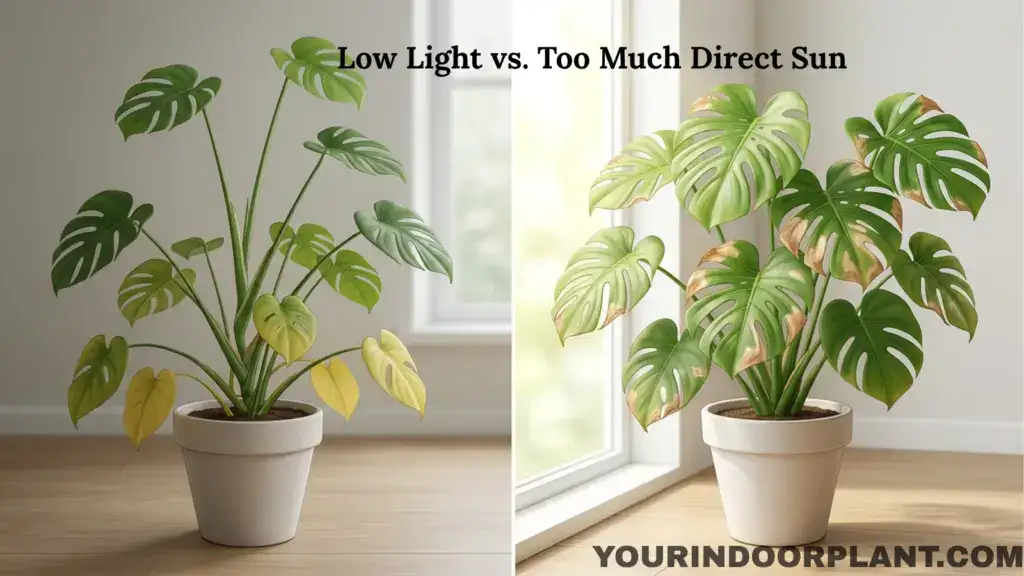
Low light reduces the plant’s ability to support all its leaves, so it begins shedding older ones.
Signs of insufficient light:
- Yellowing combined with stretched, leggy growth
- New leaves smaller than previous ones
- Overall slow growth
Too much direct sun can also cause yellowing, but it usually appears with tan, brown, or crispy patches rather than uniform yellowing.
What to do: Move the plant closer to a bright source of indirect light. An east-facing window often works well. Avoid sudden exposure to strong direct sun.
4. Natural Aging
It is normal for a healthy Monstera to yellow and drop an occasional older lower leaf as it grows.
When it is normal:
- Only one or two of the oldest leaves are affected
- The rest of the plant looks healthy and continues producing new growth
If several leaves are turning yellow at the same time, especially newer leaves, do not assume it is normal aging.
Simply remove the fully yellow leaf. No further treatment is required.
5. Nutrient Issues
A lack of nutrients (especially nitrogen) or salt buildup from excess fertilizer can cause yellowing.
- Signs of possible deficiency: Overall pale growth or older leaves yellowing first.
- Signs of salt buildup: Yellowing combined with brown tips or white crust on the soil.
Do not fertilize a Monstera simply because a leaf is yellow. Check watering, roots, and light first. Nutrient deficiency becomes more likely when the plant has been growing in depleted soil and shows broader signs of pale growth.
If deficiency is likely, use a balanced liquid fertilizer at half strength during the growing season. If salt buildup is suspected, flush the pot thoroughly with clean water and reduce feeding frequency.
If you are unsure whether your plant actually needs fertilizer, compare the symptoms with our guide to fertilizers for indoor plants before increasing feeding.
6. Root-Bound Stress

When roots completely fill the pot, the plant struggles to absorb water and nutrients efficiently.
Signs:
- Roots growing heavily out of drainage holes
- Soil dries out very quickly
- Water runs straight through the pot or the root ball becomes difficult to re-wet
- Yellowing despite otherwise consistent care
What to do: Repot into a container only 1–2 inches larger using a fresh chunky mix.
If the roots need more room, our step-by-step guide on how to repot a Monstera plant explains how to move the plant without unnecessarily disturbing the root system.
7. Pests
Spider mites, thrips, mealybugs, and scale can cause yellowing, stippling, or spotted leaves.
What to do: Inspect the undersides of leaves and new growth. Isolate the plant and identify the pest before choosing a treatment.

8. Poor Soil or Poor Drainage
Dense, compacted soil reduces airflow around the roots. Even if you are not overwatering heavily, the mix can stay wet too long, leading to root stress and yellow leaves.
What to do: Repot into a chunky, well-draining aroid mix that allows both moisture retention and good airflow.
If yellowing is accompanied by persistently wet soil or suspicious roots, our guide to how to treat root rot in houseplants can help you distinguish root damage from ordinary overwatering stress.
9. Environmental Stress, Humidity, and Water Quality
Sudden changes such as repotting, moving the plant, temperature drops, or cold drafts can trigger temporary yellowing. Keep conditions stable and avoid making additional changes while the plant adjusts.
Low humidity is more likely to cause crispy brown edges and dry tips than widespread yellowing. If dry indoor air is a recurring problem, see our guide on how to increase humidity for houseplants for practical options.
If yellowing continues despite good watering, light, and root health, consider whether your tap water is high in dissolved minerals or salts, especially if you also see white residue on the soil or pot.
Should I Cut Yellow Monstera Leaves?
Yes. Once a leaf has turned fully yellow, it will not become green again. Removing a fully yellow leaf will not fix the underlying problem, but it improves the plant’s appearance and removes tissue that is no longer functioning normally.
Use clean scissors or pruners and cut close to the main stem. Do not remove leaves that are only partially yellow unless the damage is extensive.
How to Diagnose Systematically
Use this simple decision path:
- Is the soil wet? → Check drainage and roots.
- Is the soil bone dry? → Underwatering.
- Is the soil normal but growth is stretched and leggy? → Low light.
- Are only the oldest leaves affected while new growth looks healthy? → Natural aging.
- Are there spots, webbing, or sticky residue? → Pests.
- Did the yellowing start after repotting or moving the plant? → Acclimation or root disturbance.
- Is there white crust on the soil or pot? → Possible salt buildup or water quality.
Change only one major factor at a time so you can see what actually helps.
Prevention
- Use a chunky, well-draining aroid mix.
- Water based on soil moisture, not a calendar.
- Provide consistent bright indirect light.
- Avoid oversized pots.
- Fertilize moderately only during active growth.
- Inspect new plants before adding them to your collection.
Frequently Asked Questions
No. Once a leaf has turned fully yellow, the chlorophyll is lost and the leaf will not recover its green color. Focus on preventing further yellowing.
Lower leaves often yellow first because of overwatering, mild underwatering, or natural aging. Check soil moisture and whether new growth looks healthy before deciding on a response.
No. Overwatering is common, but yellow leaves can also result from underwatering, low light, pests, root-bound stress, poor soil, or natural aging.
Not immediately. Check watering, roots, and light first. Fertilizing a plant with root stress can make the problem worse.
There is no fixed schedule. For many indoor Monsteras, let the top 2 inches of soil dry before watering, then adjust according to pot size, light, temperature, and season.
Some yellowing can happen after repotting because the roots were disturbed or the plant is adjusting to a different soil environment. Keep watering, light, and temperature consistent while it settles. If several leaves continue yellowing or the soil stays wet for too long, check the roots and drainage rather than assuming it is normal transplant shock.
Final Thoughts
Yellow leaves are almost always a signal rather than a mystery. In most cases, correcting watering and drainage solves the problem. Start with the soil and roots, improve light if needed, and avoid changing everything at once.
A Monstera that recovers from yellowing often produces stronger growth afterward once the underlying cause is fixed.